The AACR Annual Meeting 2026 will open with two days of Educational Sessions and Methods Workshops designed to help attendees step beyond their own disciplines and acquire tools they can use in their own research.
This year’s Educational Program is available to all attendees as part of their standard meeting registration at no additional cost. A selection of sessions will be eligible for continuing medical education (CME)/maintenance of education (MOE) credit.
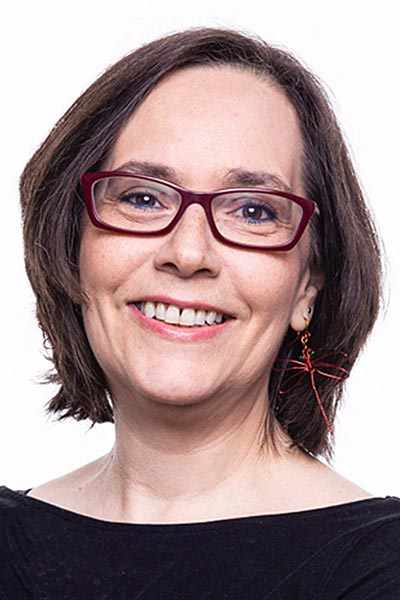
“The Educational Sessions create protected time for all of us—students and trainees, clinicians, basic scientists, data scientists, patient advocates, and other stakeholders—to step outside our daily niche, update our knowledge, and see how different parts of the cancer continuum connect to each other,” said Edna Cukierman, PhD, of the Fox Chase Cancer Center at Temple University Hospital, who is the chair of the Annual Meeting Education Committee.
This cross-disciplinary emphasis in the Educational Program is designed to create a launchpad for the scientific sessions that follow through the week and encourage collaboration by broadening the shared vocabulary and scientific knowledge among attendees, regardless of their particular area of research focus, said Cukierman.
Artificial intelligence (AI) features prominently in the Educational Program, with sessions that discuss how to translate this rapidly growing tool into practical pipelines for oncology. Educational Sessions about using AI in biomarker discovery and drug development will walk attendees through emerging approaches to integrate histopathology, omics, and clinical data in ways that can surface more robust biomarkers and sharpen decision-making in early treatment.
Chemistry remains a major point of focus, with a four‑part “Chemistry to the Clinic” sequence—on next-level conjugates, induced‑proximity therapeutics, novel targets and therapeutic modalities, and transcriptomics-driven drug discovery—offering a bench‑level look at the strategies and design decisions behind the next generation of therapeutics. “These sessions are explicitly welcoming in both directions—they invite chemists and protein engineers into the complex world of tumor heterogeneity, microenvironments, and host factors, while also inviting biologists and clinicians into the ‘why’ behind drug and conjugate design,” noted Cukierman.
Within the Educational Sessions, cancer prevention and detection are covered through sessions that focus on deploying multimodal platforms for early detection and on wearables and digital biomarkers for continuous monitoring. Attendees will find content about imaging, digital pathology, and molecular readouts, and how they can be integrated with real‑world signals from sensors to move detection earlier, make risk assessment more precise, and support ongoing monitoring in everyday clinical workflows, translating method development into study design, validation, and implementation.
Additional topics covered by the Educational Sessions include immunology for nonimmunologists, complex trial designs, hematologic malignancies, tumor biology and evolution, academic entrepreneurship, and effective science communication, among several others.
The Methods Workshops will be geared towards offering practical, hands-on information, Cukierman explained. Like the Educational Sessions, they will span the spectrum of cancer research. There will be a clinical trial design session that walks through Bayesian and model-assisted dose-finding strategies. Another workshop will cover how to integrate biomarkers, advanced imaging, and multiomics into research and clinical workflows. A session will also discuss methods to analyze imaging, molecular, and phenotypic data in a preclinical context as well.
Moreover, a Methods Workshop will showcase the use of the latest data model from AACR Project GENIE®, a pancancer registry of clinico-genomic data collected via a multi-institutional collaboration.
All Educational Sessions and Methods Workshops will be recorded and available on-demand to all registered attendees via the virtual meeting platform through October 2026.
For the most up-to-date information on session dates, times, and locations, check the Annual Meeting App and Online Itinerary Planner.
More from the AACR Annual Meeting 2026 »
View a photo gallery of scenes from San Diego, join the conversation on social media using the hashtag #AACR26, and read more coverage in AACR Annual Meeting News and on Cancer Research Catalyst, the official blog of the AACR.