The AACR Annual Meeting 2026 is just around the corner, and excitement is building to see what groundbreaking advances will be showcased this year when more than 22,000 attendees convene in San Diego. The meeting will be held from April 17 to 22, and in-person and virtual registration options are available.

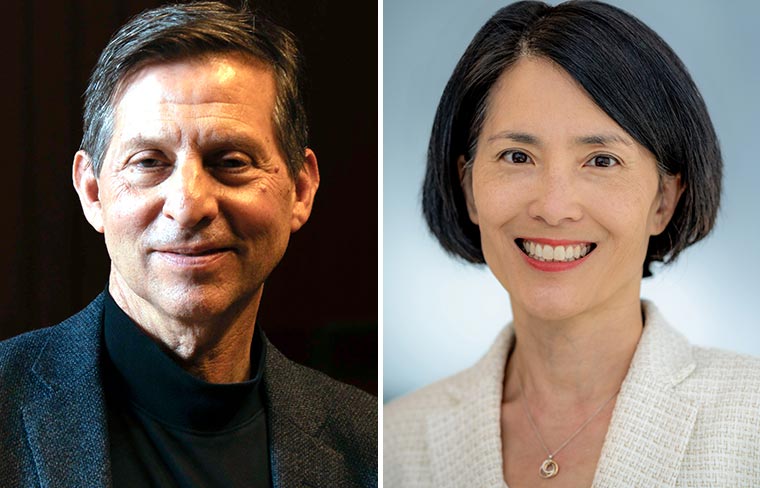
This year’s Annual Meeting Program Committee chairs are:
- Paul S. Mischel, MD, FAACR, a Fortinet Founders Professor and vice chair for research in the Department of Pathology at Stanford University School of Medicine and a Sarafan ChEM-H Institute Scholar at Stanford University; and
- Alice T. Shaw, MD, PhD, FAACR, chair of the Department of Medical Oncology and chief of strategic partnerships at Dana-Farber Cancer Institute.
“The AACR Annual Meeting has long been the touchstone of the cancer research community, and, thanks to the tireless efforts of Drs. Mischel and Shaw, this year’s meeting promises to continue that great tradition,” said AACR President Lillian L. Siu, MD, FAACR, a senior medical oncologist, co-director of the Phase I Clinical Trials Program, BMO Chair in Precision Cancer Genomics, and co-director of the Bras and Family Drug Development Program at the Princess Margaret Cancer Centre, University Health Network in Canada.
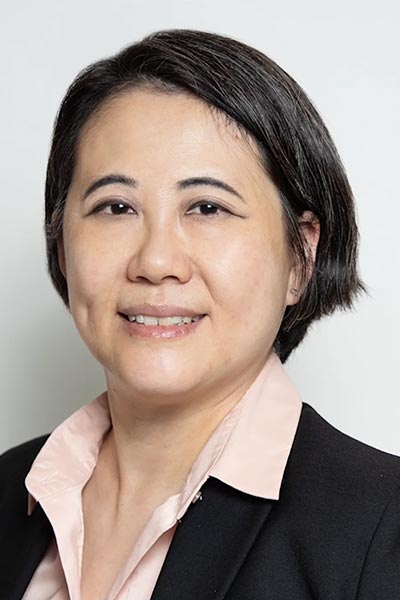
“Drs. Mischel and Shaw have expertly designed a program that showcases advances across the continuum of cancer research while emphasizing the importance of interdisciplinary and international collaboration in sustaining this progress,” Siu added.
“From the most fundamental discoveries in cancer biology, to therapeutic advances that would have been unimaginable only a few years ago, the work highlighted at the AACR Annual Meeting, conducted by its members, is changing the human face of cancer, giving hope to countless patients and their families, and informing our understanding of this devastating disease and how to combat it,” said Mischel.
The theme of this year’s scientific program, “Precision, Partnership, Purpose: Advancing Cancer Science to Save Lives Globally,” reflects the extraordinary advances in cancer research, as well as their expected impacts for patients across the globe.
“Precision captures the remarkable progress we’ve made in understanding cancer biology and translating that knowledge into increasingly tailored therapies—advances that are only possible through partnership among researchers, industry partners, regulatory and funding agencies, and patients,” said Shaw.
“Finally, our collective purpose is more important than ever,” she added. “At a time when research faces increasing challenges and public trust in science is diminishing, every experiment and every clinical trial has to be guided by a clear purpose: to meaningfully improve the lives of patients with cancer.”
The theme is apparent throughout the meeting’s scientific program, which the program chairs note has been intentionally designed to highlight cutting-edge science across the cancer research continuum, to foster interdisciplinary and cross-sector collaboration, and to emphasize research that has clinical and global relevance.
With complementary areas of expertise, Mischel, a basic researcher, and Shaw, an expert in translational and clinical research, were able to craft a program that skillfully ties advances in discovery science to therapeutic innovation and clinical impact.
“This year’s AACR Annual Meeting features an exceptionally rich and diverse scientific program that reflects the incredible pace of progress and innovation in cancer research,” said Shaw.
“Game-changing discoveries are transforming the landscape of cancer science at a remarkable pace, from artificial intelligence (AI), to immunology, to new drug development, including antibody-drug conjugates, bispecifics, molecular glues and degraders, and small molecules,” said Mischel. He emphasized that all of these topics will be captured by the meeting’s scientific program, as part of its robust representation of fundamental cancer science, translational and clinical research, population sciences, cancer prevention, and health disparities.
Notably, the six Plenary Sessions will spotlight timely and diverse areas of research, such as AI, minimal residual disease, early-onset cancer, and innovative treatment modalities. The Opening Plenary Session will exemplify the breadth and overarching theme of the Annual Meeting with presentations on topics that have the potential to transform the future of cancer research and patient care, including immunotherapy, chemistry and small-molecule drug development, AI, and targeted therapy development. The final Plenary Session will highlight the meeting’s key takeaways in basic and translational research, population sciences, and clinical research.
As in previous years, the meeting will be livestreamed for remote attendees, and all registrants will have access to the on-demand recordings through the end of October.
“The AACR Annual Meeting offers an unparalleled opportunity for attendees to learn about the most important advances in cancer research,” Shaw said. “There truly is something for everyone, and we hope that attendees will come away energized by the science, the teamwork, and the urgent need to accelerate discoveries to patients.”
“We are thrilled that the meeting has come together in such a coherent and compelling way,” added Mischel. “We are excited about it and hope that you will be too.”
Register Today for the AACR Annual Meeting 2026 »
Don’t miss the world’s premier cancer research event, April 17 to 22 in San Diego. In-person and virtual registration packages include access to live sessions, Q&A, networking, CME/MOC credits for select sessions within the Educational Program, and more.