At the AACR Annual Meeting 2026, attendees will have the opportunity to learn about how artificial intelligence (AI) tools are being deployed in real time, from the lab bench to the clinic, from a variety of speakers spanning different fields.
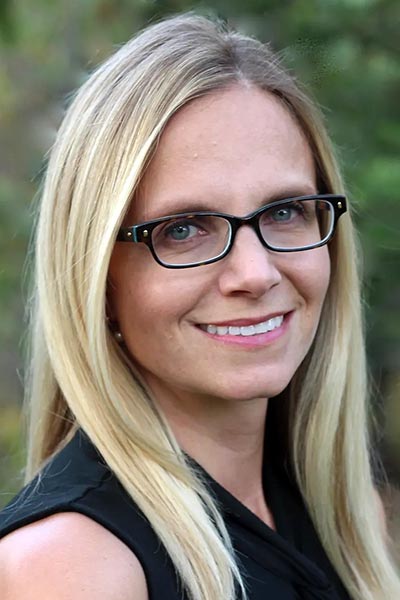
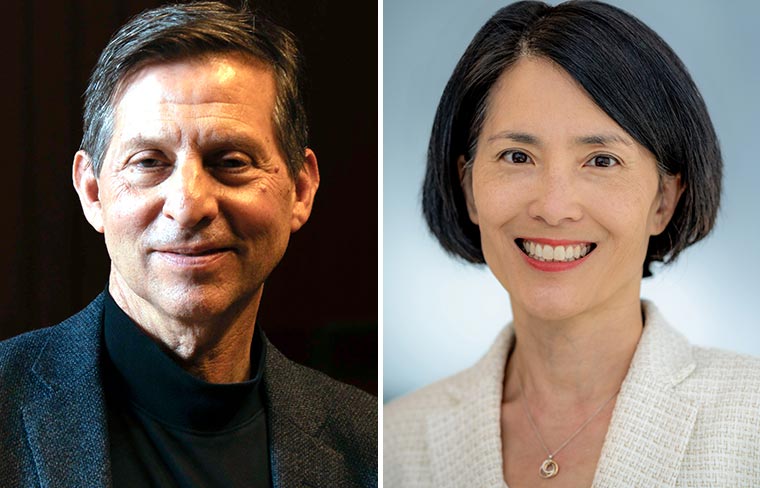
“This year’s Annual Meeting has a fantastic lineup of sessions and speakers covering many topics around AI and machine learning in cancer research, ranging from target and biomarker discovery through to agentic AI to aid molecular tumor boards and clinical trial enrollment,” said Christina Curtis, PhD, MSc, FAACR, of Stanford University School of Medicine, who will chair one of the many sessions about AI at this year’s meeting.
It’s no secret that AI is becoming more common and more powerful, and AI has already made its way into cancer research laboratories. The question of how scientists can best put the technology to use, however, remains an ongoing discussion.
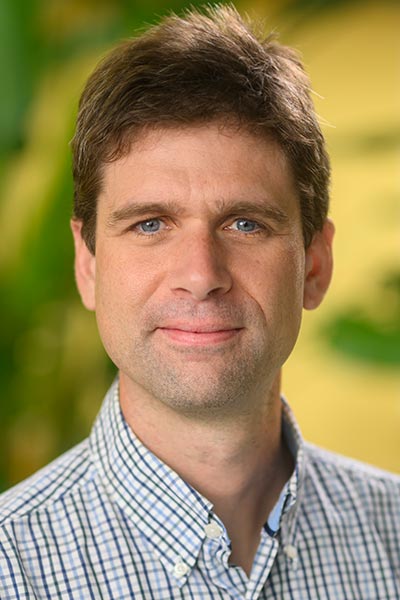
“What I hope these sessions will achieve is a better sense of what’s possible in practical terms—to go beyond the hype and have a candid discussion about the limitations in terms of data and the approaches we use,” said Benjamin Haibe-Kains, PhD, of Princess Margaret Cancer Centre in Canada, who will chair two sessions on AI. “As a community of researchers, we need to know both what’s possible today while asking ourselves what’s going to be possible in the near future.”
So pressing is the matter of AI in cancer research that a Plenary Session has been dedicated to the subject. “AI Revolution in Cancer Research” will feature four speakers from several research areas as they present on how AI has impacted their work.
Haibe-Kains pointed out that AI as a category encompasses both specialized models that are trained to solve very specific problems—such as those that analyze biomarkers and image data to detect certain cancers—and the broader, agentic models that can analyze exceptional quantities of data to augment researchers’ capacity to make decisions, like selecting the specialized AI tool for a given job.
“I suspect that, at these sessions, we’ll have people talking about very specific methods on very specific topics, but we’ll also have people who are building flexible frameworks that use AI almost as a co-scientist,” he said. “I’m excited to hear how researchers are positioning these more general tools, because, due to their agentic nature, they can potentially help make connections that are very, very difficult to piece together on one’s own.”
Curtis emphasized the importance of agentic AI’s emergence and how it can be harnessed in cancer research contexts.
“Agentic AI represents a major inflection point, moving us from static prediction to systems that can autonomously plan, execute, and iteratively refine complex research and clinical tasks,” she said. “As AI evolves from tool to collaborator, we are exploring its impact across both discovery science and clinical decision-making in dedicated sessions.”
Two sessions on agentic AI will feature at the AACR Annual Meeting 2026: “Agentic AI as the Cancer Researcher: Autonomous Discovery in Oncology,” focused on agentic AI’s role in the laboratory, and “Agentic AI as the Oncologist: Clinical Decision Support and Human-AI Collaboration,” focused on AI’s role in the clinic.
Additionally, Haibe-Kains and Curtis will moderate a Special Session on AI. At “AI in Cancer Research and Care: What We’ve Learned and What Comes Next?”, researchers will have an open-ended discussion on the state of the field and how the AI sessions’ takeaways can be implemented at labs and cancer treatment centers around the world.
“The pace of research in this area is truly remarkable,” said Curtis. “I hope attendees will take this opportunity to learn about the current state of the art and where the future is headed!”
To learn more about AI’s evolving role in cancer research, check out the “Eye on AI” series published by Cancer Research Catalyst, the official blog of AACR.
For the most up-to-date information on session dates, times, and locations, check the Annual Meeting App and Online Itinerary Planner.
Methods Workshops and Educational Sessions
MW01: AI in Cancer Care: Practical Applications Transforming Oncology
Friday, April 17, 3-4:30 p.m. PT
Room 29 – Upper Level – Convention Center
Session Chair: Caroline Chung, MD, The University of Texas MD Anderson Cancer Center
Enthusiasm for leveraging AI across the cancer research continuum continues to grow, offering the potential to assist, advance, and accelerate scientific discovery and clinical translation. Yet implementing advanced computational methods in real-world oncology settings remains challenging. This session will provide a practical perspective on how AI-enabled approaches are being developed, deployed, and scaled from early discovery through clinical trials and emerging clinical applications. We will begin by outlining the most promising opportunities and persistent challenges in applying AI, computational modeling, and digital twin technologies to clinical oncology, emphasizing strategies for integrating clinical context across imaging, molecular, and phenotypic data for deeper insights. The session will also highlight advances in quantitative methods capable of reconstructing large tissues at very high resolution to reveal novel phenotypes, alongside particle-tracking and cell-migration analyses that illuminate tumor behavior and treatment response. Additionally, we will showcase computational and experimental frameworks for characterizing genetic biomarkers of cancer progression and therapeutic sensitivity, with examples of platforms that support precision oncology. Together, these perspectives will illustrate practical approaches to enabling effective translation and early clinical implementation of AI in cancer research.
ED03: Foundation Models and Multimodal AI for Cancer Research
Friday, April 17, 4:45-6:15 p.m. PT
Room 29 – Upper Level – Convention Center
Session Chair: Charlotte Bunne, PhD, Swiss Federal Institute of Technology Lausanne, Switzerland
Cancer data is inherently multimodal, spanning clinical imaging, digital pathology, genomics, transcriptomics, and single-cell profiling. Unlocking its full potential requires foundation models and architectures capable of meaningfully integrating these fundamentally different data types, a central challenge in the design of modern multimodal AI systems. This session examines how large-scale pretrained and generative models can jointly leverage diverse data modalities to decode tumor biology, stratify patients, and drive biomarker discovery. Speakers will discuss how such models can learn from perturbation data to predict cellular responses to treatment, and how multimodal representations can be embedded into agentic AI systems capable of autonomous reasoning and decision-making across the cancer research and clinical pipeline. The session will also address the practical and methodological challenges of building, scaling, and validating multimodal foundation models in oncology settings.
ED04: AI in Biomarker Discovery and Drug Development
Saturday, April 18, 12:30-2 p.m. PT
Ballroom 20 AB – Upper Level – Convention Center
Session Chair: Jakob Nikolas Kather, MD, MSc, Technische Universität Dresden, Germany
Artificial intelligence is changing how biomarkers are discovered, validated, and translated into clinical research and drug development. This Education Session is designed for a medical and biomedical research audience. It provides a practical overview of modern AI methods across pathology, genomics, radiology, and clinical data. A key focus is on foundation models that can learn general representations from large, diverse datasets and then be adapted to specific biomarker tasks. We will also cover AI agents. These systems can plan multistep workflows, connect tools, and support iterative hypothesis generation and study execution. Speakers will discuss applications such as predictive and prognostic biomarker discovery, patient stratification, target selection, and trial enrichment. The session will address requirements for real-world use. Topics include data quality, model evaluation, uncertainty, interpretability, and regulatory and ethical considerations. We will highlight pitfalls such as bias, dataset shift, and reproducibility challenges. We will also share practical strategies to build robust and clinically meaningful AI biomarker pipelines.
Advances in Technology Sessions
AT05: Using AI and Spatial Transcriptomics Data to Predict Spatial Gene Expression from Histopathology Slides
Monday, April 20, 12:30-2 p.m. PT
Ballroom 6 DE – Upper Level – Convention Center
Session Chair: Eytan Ruppin, MD, PhD, Cedars-Sinai
This session will provide an update on recent approaches for harnessing AI to learn about the spatial organization of human tissues. Speakers will describe computational approaches that make spatial omics experiments smarter, faster, and more informative by enhancing the detail observed, extending analyses across large tissues, and integrating diverse molecular omics data. They will also look at recent studies on developing agents that work autonomously or in a closed-loop collaboration with researchers and clinicians to facilitate the analysis and characterization of pathology slides and spatial transcriptomics data. Finally, they will examine ways to infer spatial biology and cancer treatment response biomarkers directly from histopathology.
AT02: Agentic AI as the Cancer Researcher: Autonomous Discovery in Oncology
Tuesday, April 21, 10:15-11:45 a.m. PT
Ballroom 20 AB – Upper Level – Convention Center
Session Chair: Marinka Zitnik, PhD, Harvard University
AI agents are a new class of artificial intelligence systems that can contribute to cancer research as partners to human researchers. These systems can plan multistep analyses, retrieve and organize knowledge, use external tools, and adapt their actions based on intermediate results. In this role, they can help researchers explore hypotheses, connect evidence across datasets, and support iterative cycles of analysis and experimentation. They can be used for tasks such as integrating multimodal molecular and clinical datasets, identifying mechanistic hypotheses from large bodies of literature and experimental data, prioritizing experiments, and exploring therapeutic strategies. By combining foundation models with biomedical knowledge, computational tools, and experimental feedback, these systems can support discovery across many areas of cancer research. This session will examine emerging approaches for building and using agentic AI systems in cancer research. It will also address key challenges for their use in practice, including evaluation of scientific reasoning, robustness in multistep analyses, interpretability of generated hypotheses, and effective interaction between human researchers and AI systems. The session will discuss how AI co-scientists may strengthen the research process and accelerate discovery in oncology.
AT04: AI-Based Tissue Biomarkers in Cancer: Multimodal AI Across Scales
Tuesday, April 21, 12:30-2 p.m. PT
Ballroom 20 CD – Upper Level – Convention Center
Session Chairs: Benjamin Haibe-Kains, PhD, Princess Margaret Cancer Centre, Canada
This session explores how multimodal AI is transforming tissue into a quantitative biomarker platform, linking morphology, spatial organization, molecular programs, and clinical outcomes to drive precision oncology. We will cover emerging foundation-model approaches for whole-slide histopathology (self-supervised and weakly supervised learning), methods for cross-site generalization and harmonization, and strategies to represent tissue as more than pixels but through cell-level phenotyping, spatial neighborhoods, and graph-based modeling of the tumor microenvironment. A central theme is multimodal fusion across scales, integrating digital pathology with spatial transcriptomics/proteomics, bulk and single-cell genomics, radiology, and longitudinal clinical data to discover robust, biologically grounded biomarkers of prognosis, treatment response, and resistance. Finally, we address what it takes to move from compelling retrospective results to impact: rigorous validation, bias and fairness audits, reproducible pipelines, and trial-ready endpoints.
AT03: Agentic AI as the Oncologist: Clinical Decision Support and Human-AI Collaboration
Wednesday, April 22, 10:15-11:45 a.m. PT
Ballroom 6 B – Upper Level – Convention Center
Session Chair: Renato Umeton, PhD, St. Jude Children’s Research Hospital
AI is reshaping how discoveries move from lab to bedside and how industry turns breakthroughs into dependable clinical products. This session opens with lessons from translating computational imaging and machine intelligence into real-world solutions spanning diagnostic imaging, image-guided therapy, and precision medicine. Additional talks will focus on how time-resolved models can quantify treatment response as it unfolds and examples of practical use cases that accelerate impact.
Plenary Sessions
PL03: AI Revolution in Cancer Research
Monday, April 20, 8-10 a.m. PT
Hall H – Ground Level – Convention Center
Session Chair: Jakob Nikolas Kather, MD, MSc, Technische Universität Dresden, Germany
AI is reshaping cancer research at every level, from molecular discovery to clinical decision-making. This plenary session brings together leaders working at the frontier of AI for oncology. Presentations will focus on Biomni, a general-purpose AI agent that autonomously executes biomedical research tasks with specialized tools and databases; foundation models for single-cell and spatial transcriptomics, including the path toward virtual cell models that predict cellular responses to perturbations; the challenge of deploying clinical AI at scale, drawing on experience reducing sepsis mortality across dozens of U.S. hospitals; multimodal foundation models that integrate histopathology, genomics, radiology, and clinical data to improve cancer diagnosis and treatment prediction; and a discussion of the emerging paradigm of autonomous AI agents in oncology and their connection to foundation models and clinical AI. This session covers the full arc from biological discovery and model development to real-world clinical implementation and will showcase how AI can improve cancer research and care.
Special Sessions
SS05: AI in Cancer Research and Care: What We’ve Learned and What Comes Next?
Tuesday, April 21, 5-6:30 p.m. PT
Ballroom 20 CD – Upper Level – Convention Center
Session Chairs: Benjamin Haibe-Kains, PhD, Princess Margaret Cancer Centre, Canada; and Christina Curtis, PhD, MSc, FAACR, Stanford University School of Medicine
Artificial intelligence is rapidly transforming cancer research and clinical care, yet important questions remain about when and how these technologies deliver meaningful improvement in cancer research and care. This special session will bring together leading researchers developing AI methods across clinical oncology, computational biology, and multimodal biomedical data integration. The discussion will focus on lessons learned from early applications of AI in cancer research and explore emerging directions that may shape the next generation of discovery and clinical decision support.
Panelists will address key questions at the frontier of the field. When should autonomous AI agents be deployed in research or clinical workflows, and what types of tasks are most suitable for automation? When does integrating diverse data types, such as genomics, imaging, pathology, and clinical records, improve predictive models and clinical insight, and when does additional data introduce unnecessary complexity? Through brief perspectives from each panelist followed by an extended moderated discussion, the session will examine practical opportunities, limitations, and deployment challenges of AI in oncology.
Register Today for the AACR Annual Meeting 2026 »
Don’t miss the world’s premier cancer research event, April 17 to 22 in San Diego. In-person and virtual registration packages include access to live sessions, Q&A, networking, CME/MOC credits for select sessions within the Educational Program, and more.