The AACR Annual Meeting 2026 will feature two session tracks dedicated to exploring how the evolving policy landscape impacts researchers, clinicians, and patients, as well as staff from key federal agencies. Through the Regulatory Science and Policy track, attendees will learn about strategies for expanding clinical trial access to more patients, opportunities to expedite approval pathways for novel therapeutics, implications for the clinical adoption of blood-based cancer detection tests, and more. Meanwhile, sessions in the Science and Health Policy track include ways to navigate the policies affecting the cancer research community, including potential legislation to expand access to cancer screening.
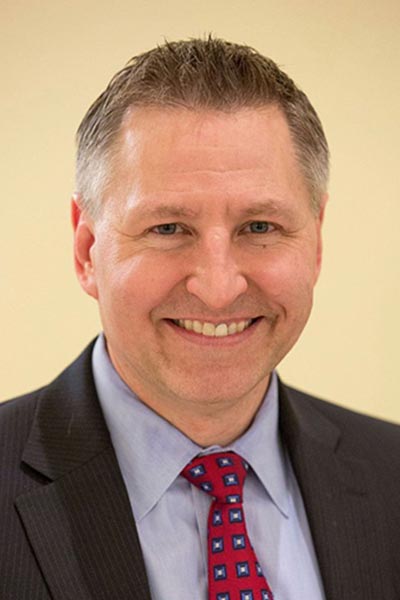
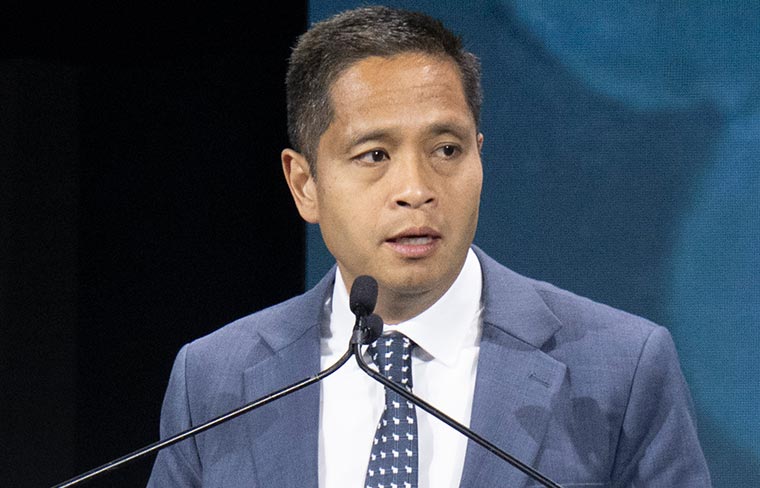
The sessions in both tracks will provide attendees with an opportunity to hear from and interact with key staff from the U.S. Food and Drug Administration (FDA) and the National Institutes of Health (NIH), as well as patient advocates and leaders from industry and academia, explained AACR’s Chief Policy Officer Jon Retzlaff.
“These experts will speak about important topics and issues that will determine the future of cancer research, help to increase the development of safe and effective lifesaving cancer therapies, and ensure that optimal care is provided to all patients with cancer,” Retzlaff said.
Four of the sessions in the Regulatory Science and Policy track were co-organized with the FDA to provide attendees with the perspectives of federal regulators who are working on approaches to accelerate rare disease drug development, advance novel approaches when animal testing may not be necessary, support the extrapolation of adult data for pediatric approvals, and develop regulations regarding artificial intelligence and machine learning (AI/ML) technologies.
“The sessions that include FDA staff will provide attendees with numerous opportunities in an open forum to interact with regulators and hear about the positions and priorities of the agency that need to be considered before a potential therapy to benefit patients with cancer is considered,” Retzlaff said.
The Science and Health Policy track will include a “Researcher Town Hall,” on Sunday, April 19, from 3-4:30 p.m. PT, that offers a forum for attendees to discuss issues related to how the current administration is approaching cancer health disparities research, international collaboration, federal funding for research grants, and more. Additionally, Retzlaff said this session will underscore the importance of advocacy in the current political environment.
“As many will remember, the outlook for NIH funding in early 2025 looked bleak, especially when considering the administration was proposing to cut NIH by 40%,” Retzlaff added. “However, by the end of calendar year 2025—and after extensive outreach to Congress from all areas of the medical research community—Congress rejected the administration’s initial proposal.”
Ultimately, the final fiscal year (FY) 2026 Labor, Health and Human Services, Education, and Related Agencies (Labor-HHS) spending bill provided NIH with a $415 million increase and the National Cancer Institute (NCI) with a $128 million increase.
“If we hope to build on this success during the upcoming FY2027 appropriations process, it’s going to require additional efforts from the broader medical research advocacy community, and this Town Hall session will provide attendees with a roadmap regarding ways for them to be engaged in this overall effort,” Retzlaff said.
Learn more about the regulatory science and policy sessions in these tracks below, and check out the Annual Meeting App and Online Itinerary Planner for the most up-to-date information on session dates, times, and locations.
Regulatory Science and Policy Track
ED60: Dose Optimization in Early-Phase Oncology Trials: Implementing the Vision of FDA’s Project Optimus
Saturday, April 18, 8-9:30 a.m. PT
Room 29 – Upper Level – Convention Center
Chair: Gideon Blumenthal, MD, Pfizer
Dose selection in oncology has traditionally emphasized the maximum tolerated dose, often with limited systematic dose exploration and incomplete understanding of exposure-response and long-term tolerability. FDA’s Project Optimus is reshaping this paradigm by calling for more rigorous, data-driven, and patient-centered dose optimization, particularly in early-phase trials. This Educational Session will provide practical guidance on operationalizing dose optimization aligned with Project Optimus expectations. An industry perspective will outline the evolving regulatory landscape and implications for early development strategy and the inherent tradeoffs associated with dose optimization. Subsequent talks will focus on how randomization and backfill designs in early-phase trials can enhance the strength and interpretability of evidence supporting dose selection. Another will address how integrating patient-reported outcomes into early development can better characterize tolerability, inform dose selection, and ensure that optimized doses reflect patient experience, not just clinical and biomarker endpoints. Together, these presentations will illustrate how multidisciplinary approaches—spanning trial design, quantitative methods, and patient-centered assessments—can improve the rigor and relevance of dose-finding research and increase the likelihood of selecting doses that are both effective and tolerable in real-world practice.
DC10: Advancing Patient-Centered Clinical Trials: Bringing Trials to Patients and Patients to Trials
Saturday, April 18, 10-11:30 a.m. PT
Room 1 – Upper Level – Convention Center
Moderator: Roy S. Herbst, MD, PhD, Yale Cancer Center
Patient participation in clinical trials is essential to achieving sustained improvement in cancer care. However, only 7% of oncology patients in the United States enroll in clinical trials, most of which take place in academic comprehensive cancer centers located in major cities. In contrast, more than 80% of cancer care is delivered in community-based, rural, and underserved settings. To address these challenges, novel approaches to clinical trial design and conduct have been developed, piloted, and in many cases, employed to better meet patients where they receive care and to improve participation among more representative patient populations. Additionally, national policy efforts from the National Cancer Institute and the FDA have evolved to help train investigators and bridge trial and trust for all populations. In this session, experts will discuss ongoing efforts to advance innovative, patient-centered clinical trials that integrate patient perspectives across all stages of trial development, with the goal of improving access, inclusivity, and relevance of oncology research.
DC01: Where Expedited Pathways, Innovation, Safety, and Patient Access Collide: A KRAS Case Study
Saturday, April 18, 12:30-2 p.m. PT
Room 1 – Upper Level – Convention Center
Moderators: Elizabeth M. Jaffee, MD, FAACR, Sidney Kimmel Comprehensive Cancer Center, and Timothy A. Yap, MBBS, PhD, The University of Texas MD Anderson Cancer Center
Remarkable progress has been made against many cancers, driven in part by rapid advances and increasing sophistication in cancer drug development. Unfortunately, these gains have not been shared equally across all patient populations. In some high unmet-need diseases, emerging therapies are beginning to show meaningful promise and potentially level out these discrepancies. For example, novel RAS-targeting agents have demonstrated significant biological and clinical activity in metastatic pancreatic cancer and may ultimately alter the standard of care following FDA approval. Despite this progress, broad access to these therapies remains limited, which is not ideal for patients with aggressive, high mortality cancers. This session will examine the drivers of access gaps for highly effective therapies in high unmet-need diseases and explore potential strategies to improve access, including regulatory flexibility, innovative clinical trial designs, and other approaches to accelerate drug development.
DC02: Contextual Challenges in Interpreting Performance of Blood-Based Early Cancer Detection Tests
Saturday, April 18, 2:30-4 p.m. PT
Room 1 – Upper Level – Convention Center
Moderators: Christina Clarke Dur, PhD, MPH, GRAIL, Inc., and Bree L. Mitchell, PhD, Natera
As blood-based cancer early detection tests progress toward clinical implementation, the challenge of interpreting performance data has come to the forefront. This session, organized in association with BLOODPAC, explores the complexities of defining test performance in the context of single and multicancer detection, and the implications for clinical adoption, regulatory review, and payer evaluation. Key topics will include how test developers define intended use populations and target conditions, the use of adjusted or weighted analyses to reflect real-world prevalence, and the evolving definitions of true positives, false positives, and tissue-of-origin accuracy in multicancer settings. A panel will conclude with cross-disciplinary insights and discussion of emerging standards.
DC09: Approaches to Drug Development for Rare Malignancies
Sunday, April 19, 1-2:30 p.m. PT
Room 1 – Upper Level – Convention Center
Moderators: Elizabeth Dianne Pulte, MD, U.S. Food & Drug Administration, and Martha Donoghue, MD, U.S. Food & Drug Administration
The design and conduct of rare cancer clinical trials, as well as the evaluation of data derived from them, present unique challenges that typically increase with the degree of rarity. For example, the extreme rarity of some conditions can lead to difficulties in enrolling a sufficient number of patients even for single-arm studies. In addition, it can be difficult to characterize the effects of treatment across any subpopulations of interest (e.g., older patients, pediatrics, diverse racial and ethnic populations). This session will discuss these challenges and the role of randomized trials, small nonrandomized trials, and real-world data within regulatory frameworks for the approval of therapeutics for rare cancer indications.
DC04: Modernizing Nonclinical Safety Assessment in Oncology Product Development: Current Progress and Future Directions
Sunday, April 19, 4:45-6:15 p.m. PT
Room 1 – Upper Level – Convention Center
Moderator: Haleh Saber, PhD, U.S. Food & Drug Administration
For decades, animal toxicology studies have served as the primary method for assessing drug toxicities, with FDA and International Council for Harmonisation of Technical Requirements for Pharmaceuticals for Human Use (ICH) guidance documents providing recommendations for these studies. However, data collected for oncology pharmaceuticals over the past 10 years demonstrate that alternative approaches can effectively evaluate safety endpoints while maintaining patient safety. This session will summarize the FDA’s initiative to reduce animal testing in drug development and will examine the significant progress made in streamlining nonclinical development of oncology pharmaceuticals. Approaches such as weight-of-evidence risk assessment, new approach methodologies, and alternative toxicology designs will be discussed.
DC05: Strengthening the Oncology Trial Ecosystem Through Operational and Regulatory Innovation
Monday, April 20, 10:15-11:45 a.m. PT
Room 1 – Upper Level – Convention Center
Moderator: Lola Fashoyin-Aje, MD, MPH, Consultant
As oncology drug development increasingly depends on multiregional clinical trials, stakeholders across the research ecosystem face growing challenges in initiating and conducting studies efficiently while generating data that are meaningful for patients and regulators. Operational barriers at both the trial and site levels, including protocol complexity, redundant startup processes, contracting, Institutional Review Board (IRB) review, and infrastructure limitations, can delay activation timelines and undermine the ability of U.S. sites to remain competitive in a global clinical research environment. This session will convene experts from industry, academia, and patient advocacy to discuss key operational challenges affecting oncology trial initiation and conduct, with a particular focus on the interplay between site-level and trial-level barriers. Through presentations and panel discussion, participants will examine practical and policy-relevant strategies to reduce inefficiencies, strengthen trial infrastructure, and support more effective, patient-centered oncology drug development in the United States and globally.
DC13: Advancing Early-Phase Pediatric Cancer Trials to Turn Promising Agents into Actionable Evidence
Monday, April 20, 2:15-3:45 p.m. PT
Room 1 – Upper Level – Convention Center
Chair: Meredith S. Irwin, MD, SickKids
The development of new therapies for pediatric cancers is shaped by unique scientific, clinical, and regulatory challenges. Recent advances in cancer biology have expanded the range of potential therapeutic targets in pediatric oncology, but translating these discoveries into clinical benefit remains a significant challenge. Early-phase trials are increasingly central to bridging this gap. This session will bring together perspectives from regulatory, industry, and academic leaders to examine the evolving landscape of early-phase clinical trials in pediatric oncology. Speakers will discuss key considerations in trial design, regulatory engagement, and translational strategy, with an emphasis on optimizing the path from scientific discovery to first-in-child studies. The session will highlight opportunities to improve alignment across stakeholders and accelerate the development of innovative therapies for children with cancer.
DC07: Power in Numbers: Leveraging Adult Data in Pediatric Cancer Drug Development
Monday, April 20, 4-5:30 p.m. PT
Room 1 – Upper Level – Convention Center
Moderator: Martha Donoghue, MD, U.S. Food & Drug Administration
Given the rarity of pediatric cancers, extrapolation can be a powerful tool to advance drug development in pediatric oncology. The extent to which extrapolation of adult data can support a pediatric application depends upon numerous factors, including the degree of uncertainty regarding the similarity of the disease and response to treatment in adult and pediatric patients. This session will bring together FDA experts in pediatric hematology/oncology and clinical pharmacology, as well as key stakeholder representatives from advocacy and industry, to discuss the use of extrapolation to advance the development of new drugs and biological products for pediatric patients with cancer. Case-based presentations of recent FDA approvals will also provide additional insights into the use of extrapolation in pediatric cancer drug development.
DC03: Code Meets Cure: Navigating the Regulatory Landscape of AI in Oncology Drug Development
Tuesday, April 21, 12:30-2 p.m. PT
Room 1 – Upper Level – Convention Center
Moderator: Jeevan Puthiamadathil, MD, U.S. Food & Drug Administration
AI/ML are poised to transform oncology product development, offering powerful new tools for drug discovery, clinical trial design, patient selection, and evidence generation. However, the rapid integration of these complex, often opaque, technologies present significant regulatory challenges. Key questions remain regarding algorithm transparency, validation of AI/ML models, the potential for bias in training data, and the lifecycle management of continuous learning systems. This session will convene experts focused on establishing a common understanding of what constitutes “regulatory-grade” AI and how to build a framework of trust for these technologies.
Science and Health Policy Track
DC11: Researcher Town Hall: Navigating Policy Challenges and Securing Funding
Sunday, April 19, 3-4:30 p.m. PT
Room 1 – Upper Level – Convention Center
Moderator: Roy S. Herbst, MD, PhD, Yale Cancer Center
This town hall session will bring together scientific leaders, policy experts, and advocates to engage the research community in a dynamic discussion of emerging science policy issues that will impact researchers and shape the future of cancer research. Key topics include shifting federal funding and grant policy, cancer health disparities, international collaboration, initiatives to reduce the use of animals in research, and challenges facing the cancer research workforce. This forum provides an opportunity for community engagement to hear from attendees on policy issues affecting the research community and a platform to strategize advocacy efforts.
DC12: Cancer Prevention and Screening: Exploring Policy Solutions
Monday, April 20, 12:30-2 p.m. PT
Room 1 – Upper Level – Convention Center
Moderator: Gilbert S. Omenn, MD, PhD, University of Michigan
Effective cancer prevention and early detection require not only scientific and clinical advances but also robust policy frameworks that support widespread implementation. This session will convene leading experts in oncology, public health, and behavioral science to examine evidence-based policy solutions addressing cancer risk reduction and improved screening uptake. Presentations will explore approaches to mitigating major modifiable risk factors including tobacco and emerging nicotine product use, dietary patterns, chemoprevention, and other behaviors with a focus on policy strategies and community-level interventions that advance health equity. The session will also highlight policy mechanisms to expand access to and adherence with recommended cancer screening.
More from the AACR Annual Meeting 2026 »
View a photo gallery of scenes from San Diego, join the conversation on social media using the hashtag #AACR26, and read more coverage in AACR Annual Meeting News and on Cancer Research Catalyst, the official blog of the AACR.