Sunday’s Opening Plenary, “Precision, Partnership, Purpose: Advancing Cancer Science to Save Lives Globally,” featured four visionary scientists who shed light on the development of acquired resistance, new therapeutic approaches, and the power of artificial intelligence (AI) for cancer care.
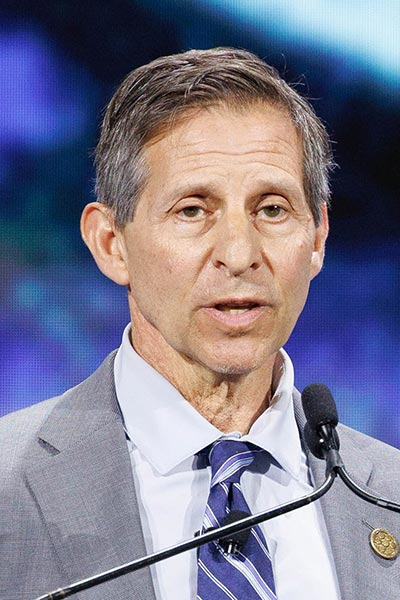
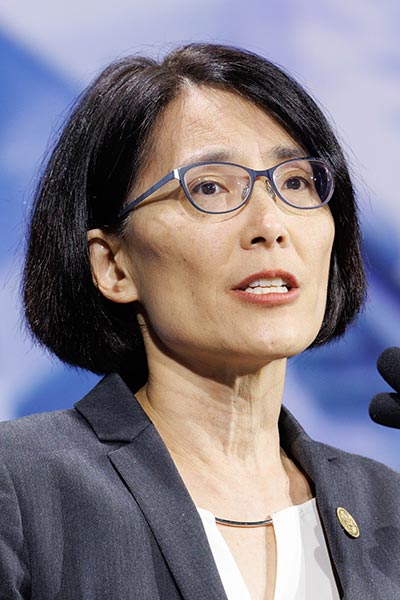
The session was organized by Annual Meeting Program Chairs Paul S. Mischel, MD, FAACR, of Stanford University, and Alice T. Shaw, MD, PhD, FAACR, of Dana-Farber Cancer Institute, who envisioned a session that would showcase trailblazing discoveries and inspire attendees during a challenging time for cancer research.
“At a time when science is under attack, we knew that both the cancer research community and the public would be looking to this meeting for inspiration,” said Mischel.
“We hope that this Opening Plenary Session will inspire you to spend the next four days exploring new approaches, forming new connections and collaborations, and renewing your commitment to our shared purpose to cure and prevent all cancers,” said Shaw.
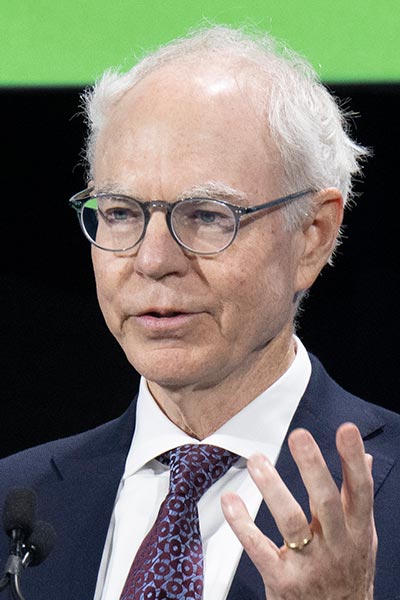
The first speaker was former AACR President Charles L. Sawyers, MD, FAACR, of Memorial Sloan Kettering Cancer Center, who explained that the progression from castration-sensitive to castration-resistant prostate cancer occurs, in part, through a lineage switch that converts prostate cancer cells from an adenocarcinoma cell state to a neuroendocrine state. Sawyers and colleagues observed that prostate cancer organoids underwent lineage switching when transplanted into mice but not when kept in culture, leading them to hypothesize that the extracellular matrix (ECM) found in vitro was preventing the transition. Consistent with this hypothesis, removing the organoids from the matrigel matrix induced transition.
Further analyses uncovered that lineage switching is regulated by the YAP1/TAZ-TEAD and NOTCH1 pathways, and that lineage switching could be prevented or promoted by inhibiting proteins within these pathways. Sawyers proposed a “counterintuitive” therapeutic approach in which transition to the neuroendocrine state would be promoted instead of prevented. Although the neuroendocrine state is associated with aggressive disease and resistance to hormone therapy, he reasoned that the upregulation of DLL3 in the neuroendocrine state would provide an actionable therapeutic target. Sawyers also shared that the acetyltransferase TIP60 upregulates the expression of neuroendocrine markers and that neuroendocrine prostate cancer cells were highly sensitive to TIP60 degradation.
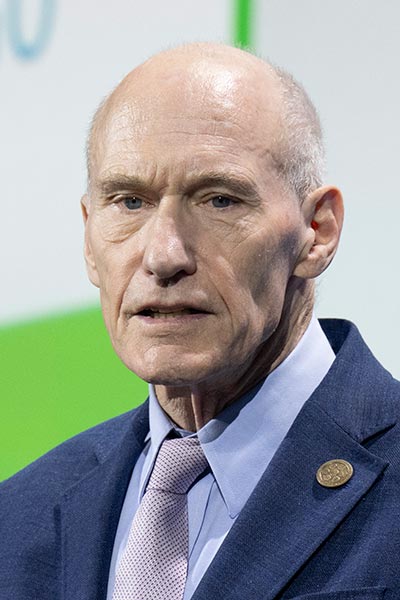
Next, Carl H. June, MD, FAACR, of the University of Pennsylvania, discussed strategies for enhancing the efficacy of chimeric antigen receptor (CAR) T-cell therapy against solid tumors. One approach relied on a CAR design for dual targeting of EGF and IL13. Among 13 patients with glioblastoma, EGF-IL13-CAR T cells led to partial responses in two and stable disease in seven.
To combat the hard-to-penetrate tumor microenvironment of pancreatic cancer, June and colleagues devised a sequential CAR T approach in which the first CAR T-cell therapy delivered eradicates cancer-associated fibroblasts so that the subsequently administered mesothelin-targeted CAR T cells could reach cancer cells—a strategy that led to responses in mice whose pancreatic tumors were otherwise resistant to mesothelin-CAR T cells.
June also discussed the potential of in vivo CAR T-cell generation and synergistic combinations of gene disruptions to increase the efficacy of this immunotherapy for solid tumors.
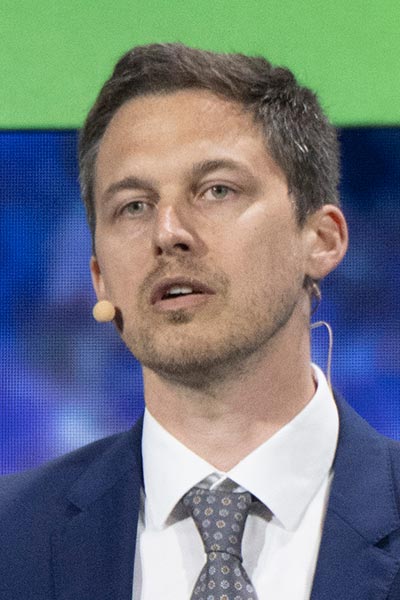
Georg E. Winter, PhD, of AITHYRA, provided mechanistic insights into how proximity-inducing molecules promote targeted protein degradation. In one vignette, he shared how an investigational compound designed to bridge the target BRD4 with the E3 ubiquitin ligase DCAF15 unexpectedly induced BRD4 degradation independently of DCAF15. Instead, the compound worked by bridging the two bromodomains within BRD4, which then promoted interaction with the ubiquitin ligase DCAF16—uncovering a new modality of targeted protein degradation that Winter called “intramolecular bivalent gluing.”
He also discussed new insights into the mechanism of action of fulvestrant (Faslodex), a selective estrogen receptor degrader (SERD). Winter and colleagues determined that fulvestrant induces SUMOylation of the estrogen receptor, which leads to degradation through the SUMO-targeted ubiquitin ligase RNF4/111. They observed, however, that this degradation was not required for the efficacy of fulvestrant, as blocking degradation through knockout of RNF4/111 did not prevent cancer-cell killing. They found that fulvestrant efficacy was instead dependent on transcriptional repression of estrogen receptor-regulated genes that occurred when the estrogen receptor was SUMOylated.
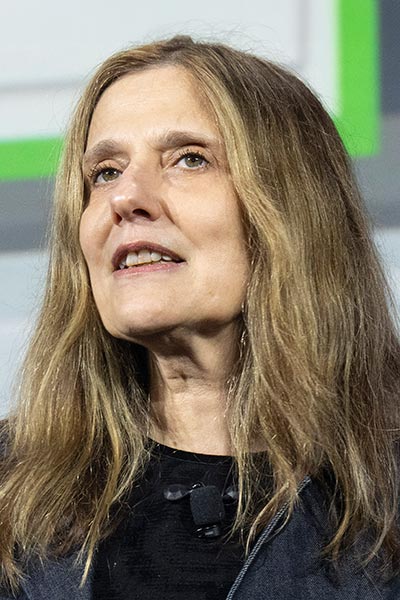
Finally, Regina Barzilay, PhD, of Massachusetts Institute of Technology, explored how AI may enhance prediction of cancer risk and treatment response. A breast cancer survivor, Barzilay shared images of her own mammograms, pointing out early changes that were present years before her diagnosis. She noted that her experience is common, citing one study that found that 31% of breast cancers in carriers of germline BRCA mutations were visible at least a year before diagnosis.
She and her team developed an AI-driven model called MIRAI that analyzes mammogram images for subtle changes associated with cancer and reports a patient’s five-year risk of breast cancer. With a C-index of 0.80, MIRAI outperformed the Tyrer-Cuzick risk prediction model, which had a C-index of 0.63. She also shared a generative AI model, named MammoGen, that can use a mammogram image to generate an image of what the patient’s mammogram may look like in the future.
Barzilay also showed how AI can help extract biological insights from pathology slides. She and colleagues developed an AI-driven model called SPARC that integrates spatial transcriptomics data with histopathology images to predict treatment responses with an area under the curve (AUC) of 0.90. The model was consistently more accurate than image-only analyses and was also able to identify cellular phenotypes associated with treatment response.
The recording of the full session is available for registered Annual Meeting attendees through October 2026 on the virtual meeting platform.
More from the AACR Annual Meeting 2026 »
Keep up with the latest from the AACR Annual Meeting 2026, whether you are attending in person or virtually. View a photo gallery of scenes from San Diego, join the conversation on social media using the hashtag #AACR26, and read coverage of upcoming sessions in AACR Annual Meeting News.