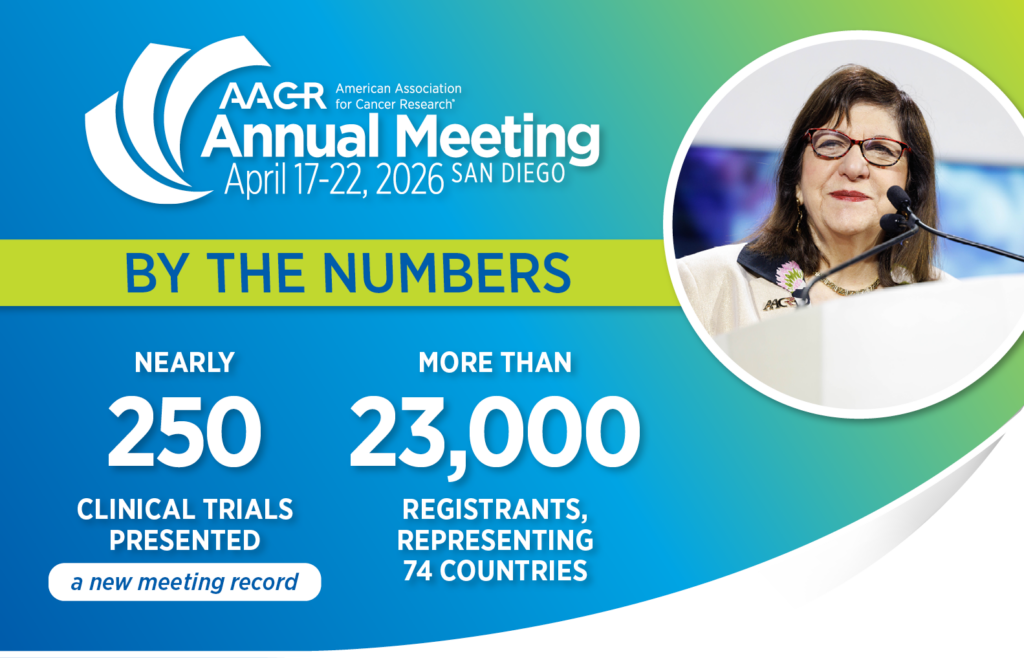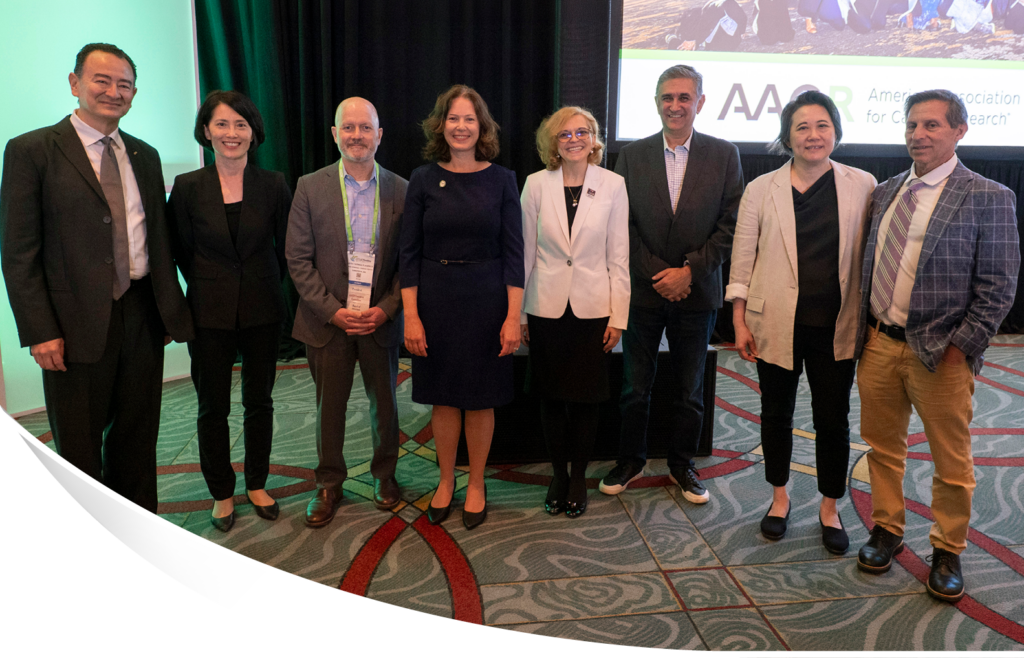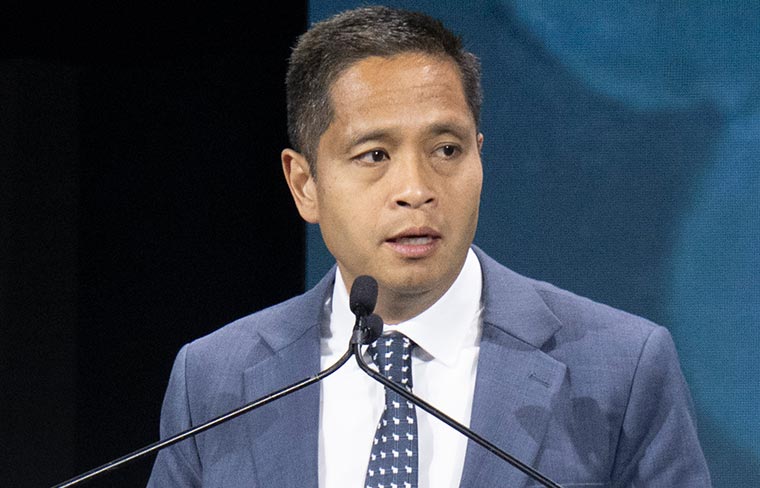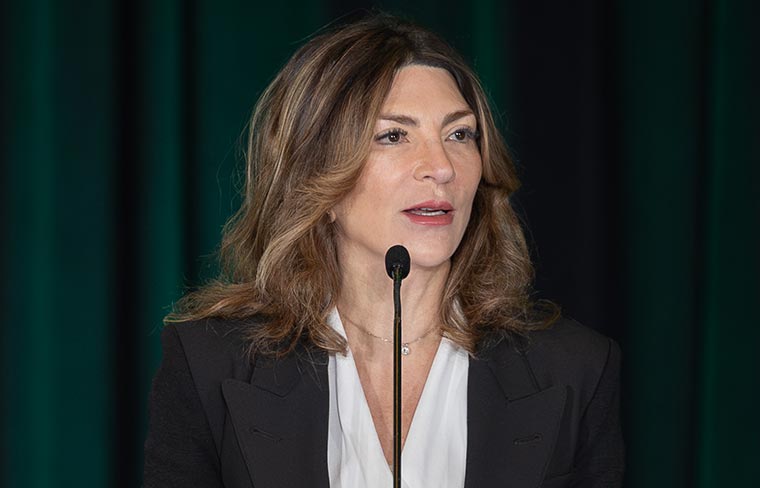
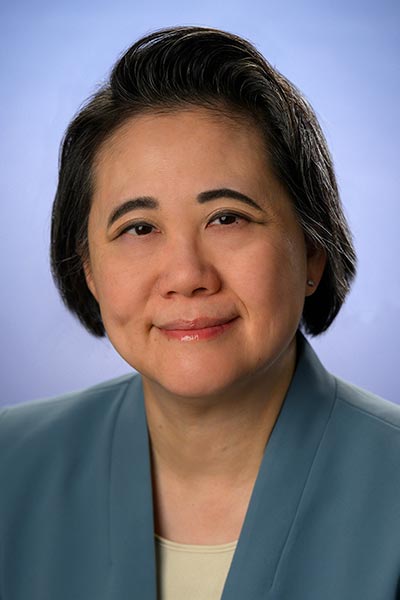
AACR President Lillian L. Siu, MD, FAACR, had two goals in mind when deciding on the topics for her Presidential Address and the Presidential Select Symposium. For her Presidential Address, she sought to share lessons gained from more than three decades of treating head and neck cancer and highlight insights that may apply to other cancer types. For the Presidential Select Symposium, she intentionally positioned herself as a learner alongside the attendees, convening a panel of leading experts to explore an area of research outside her primary expertise—cancer prevention.
“I am not in the prevention space, but I find it to be such a fascinating field,” Siu said. “I am especially intrigued by emerging precision medicine-driven approaches that aim to identify early signs of cancer and prevent disease before it develops.”
Although prevention represents a newer focus for Siu, she is an internationally recognized expert in precision medicine and early-phase drug development. She is a senior medical oncologist, co-director of the Phase I Clinical Trials Program, BMO Chair in Precision Cancer Genomics, and co-director of the Bras and Family Drug Development Program at the Princess Margaret Cancer Centre, University Health Network in Canada. While she has a research focus in head and neck cancer, she emphasizes that the principles and discoveries arising from this work have broad applicability.
“Team science in head and neck cancer can inform research across many different tumor types,” Siu explained. “During my Presidential Address, I will share examples of projects from my team that have pancancer implications for the next era of precision medicine and developmental therapeutics.”
Presidential Address: Mapping the Molecular Landscape of Head and Neck Cancer to Inform Pan-Tumor Targeting
Sunday, April 19, 5:30-6:15 p.m. PT
Ballroom 20 CD – Upper Level – Convention Center
Among the research Siu plans to present is work demonstrating how spatial transcriptomics may predict sensitivity or resistance to immunotherapy and help inform treatment decisions. Using this approach, Siu and her team examined interactions between tumor cells and immune cells in patients with head and neck cancer receiving immunotherapy. From these interactions, they identified spatial transcriptomic signatures associated with treatment response and clinical outcome. Importantly, validation using publicly available pancancer datasets showed that such signatures derived from spatial transcriptomics may be extrapolated to bulk transcriptomics, and retained their predictive value across tumor types.
“Although this work is still at an early stage, it is interesting that microscopic interactions between tumors and the immune microenvironment at a cellular level can inform clinical response to immunotherapy,” Siu said.
Siu also intends to share how advances in circulating tumor DNA (ctDNA) technology are reshaping drug development through the detection of molecular residual disease (MRD). For most of her career as a clinical trialist, drug development had focused on treating patients with advanced cancers. However, increasingly sensitive ctDNA assays now enable detection of disease at much earlier stages, she explained.
“We now have the ability to deploy novel therapies at a much earlier setting, with the goal of eradicating MRD and cure high-risk patients before treatment resistance emerges,” she added.
Her Presidential Address will highlight progress she and her team have made toward launching a new dedicated MRD detection and cancer interception program, as well as efforts to develop multiomic models incorporating MRD, ctDNA, and additional biomarkers to improve prediction of disease relapse.
Presidential Select Symposium: Targeting Stage 0: Precision-Based Prevention
Monday, April 20, 10:15-11:45 a.m. PT
Ballroom 6 A – Upper Level – Convention Center
While Siu’s work is increasingly moving earlier in the disease continuum through MRD and cancer interception strategies, the four speakers she selected for this symposium are focused on preventing cancer before it begins, using highly precise strategies.
Sharon E. Plon, MD, PhD, of Baylor College of Medicine, will discuss newborn screening for cancer predisposition conditions using targeted and whole-genome sequencing.
“I’ve done molecular screening in thousands of patients with cancer. The concept of extending genomic screening of such conditions to newborns beyond common genetic diseases is a compelling and challenging new direction,” Siu said. “It raises important logistical and ethical questions that I look forward to discussing.”
John Burn, MD, of Newcastle University, will present prevention strategies for individuals with inherited cancer risk syndromes, drawing on findings from the CAPP studies, which showed that low-dose aspirin and fermentable fiber can reduce the incidence of Lynch syndrome-associated cancers.
“By understanding the molecular basis of hereditary syndromes, we can develop targeted preventive strategies that may ultimately be translated to other high-risk populations,” Siu said.
Mary (Nora) L. Disis, MD, of Fred Hutch Cancer Center, will focus her presentation on the use of cancer vaccines for prevention and interception, highlighting early-phase clinical trials in this field.
“We are starting to see that this approach is possible, and regression of pre-invasive disease was observed in phase I trials testing cancer vaccines in patients with hereditary cancer predisposition syndromes,” Siu said.
Finally, Joann G. Elmore, MD, MPH, of the David Geffen School of Medicine at the University of California Los Angeles, will look at the promise of using artificial intelligence (AI) to improve cancer detection—and potential issues.
“Her presentation will underscore the need for thoughtful integration of AI into cancer detection, with particular attention to the importance of human-AI collaboration to minimize errors and unintended consequences,” Siu said.
Both the Presidential Address and the Presidential Select Symposium will be recorded and will remain available on-demand via the virtual meeting platform through the end of October 2026.
More from the AACR Annual Meeting 2026 »
View a photo gallery of scenes from San Diego, join the conversation on social media using the hashtag #AACR26, and read more coverage in AACR Annual Meeting News and on Cancer Research Catalyst, the official blog of the AACR.