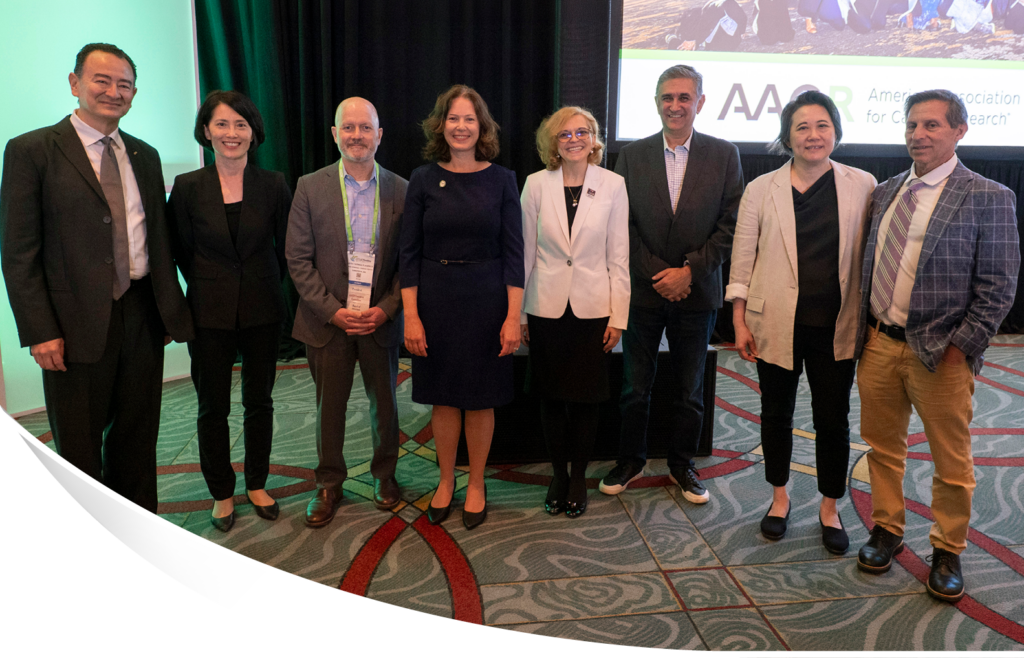
To help further the professional advancement of early-career researchers, the American Association for Cancer Research (AACR) launched the NextGen Stars Program in 2014. Each year, graduate students, postdocs, and assistant professors are selected to present their work during highly visible sessions at the AACR Annual Meeting.
This year’s class of NextGen Stars includes 11 individuals spanning different areas of cancer research. Learn more about the work of Cheuk Man (Cherie) Au, PhD, below, and check out Q&As with the other NextGen Stars to discover their research focus.
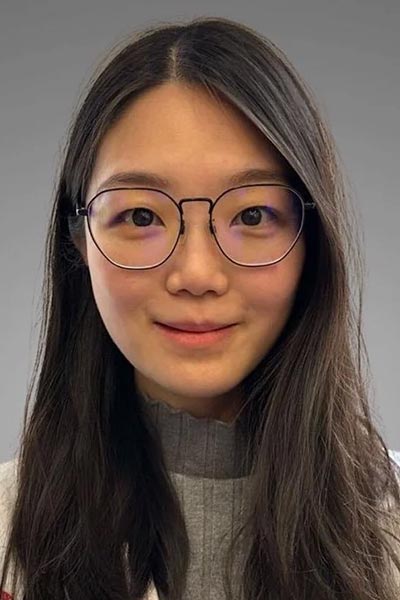
Cheuk Man (Cherie) Au, PhD
AACR NextGen Stars Class of 2026
Assistant Professor
Weill Cornell Medicine, New York, NY
Abstract Presentation:
First-in-class dual AR/AR-V7 molecular glue degraders targeting the undruggable N-terminal domain to overcome therapeutic resistance in prostate cancer
Session Details:
ADT02: Induced Proximity Pharmacology: Degraders and Beyond
Wednesday, April 22, 10:15-11:45 a.m. PT
Ballroom 6 CF – Upper Level – Convention Center
What is the subject of your research?
My research focuses on developing small-molecule therapeutic strategies for advanced prostate cancer by targeting androgen receptor (AR) signaling, a central driver of disease progression. A particular emphasis of my work is on AR-V7, the most prevalent AR splice variant, which confers resistance to standard-of-care hormonal therapies. I am especially interested in protein-degradation approaches, including molecular glue degraders, to eliminate both full-length AR and AR-V7.
What sparked your interest in this area of research, and why is it important?
My interest was motivated by the clinical challenge of treatment resistance in prostate cancer. Although current therapies effectively suppress androgen signaling initially, many tumors adapt by expressing AR splice variants such as AR-V7 that bypass these treatments. Because AR-V7 lacks the domains targeted by existing drugs, it represents a critical unmet need. Small-molecule degradation strategies offer a promising way to directly address this resistance mechanism by removing the disease-driving proteins altogether.
Where would you like to see your area of research be in five years?
In five years, I hope to see small-molecule protein degraders—including molecular glue approaches—progressing into the clinic and demonstrating meaningful benefit for patients with therapy-resistant prostate cancer. More broadly, I would like this work to help establish protein degradation as a transformative modality for overcoming drug resistance in cancer.
What (or who) inspired you to apply for the NextGen Stars program?
I was inspired to apply by mentors and collaborators who emphasized the importance of connecting innovative science with the broader cancer research community. The NextGen Stars program stood out as an opportunity to share emerging research directions while learning from leaders across academia, industry, and clinical oncology.
What do you hope to take away from your experience as a NextGen Star and your time at the AACR Annual Meeting?
I hope to gain new perspectives on cancer biology and therapeutic development, build meaningful connections with fellow researchers, and further refine how I communicate complex ideas to diverse scientific audiences. I am especially excited about conversations that may spark new collaborations and shape the next phase of my research.