The latest scientific and clinical innovations for hematologic malignancies will be showcased at the AACR Annual Meeting 2026, with sessions highlighting discovery science advances and how they are being rapidly translated into patient care.
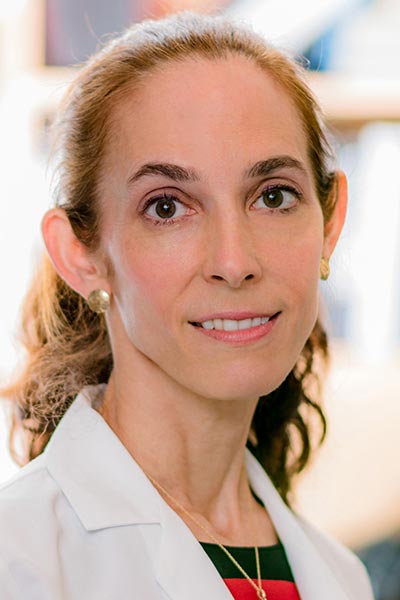
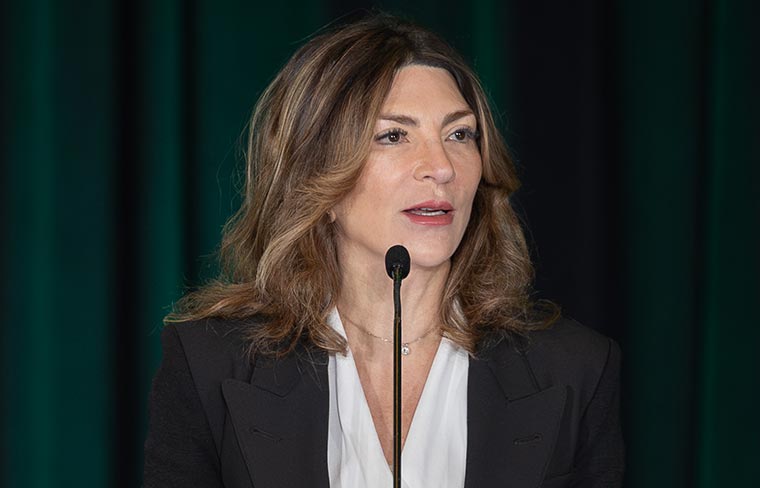
“From fundamental insights into epigenetics and clonal hematopoiesis to innovative therapy developments, this year’s AACR Annual Meeting reflects on the incredible momentum we have gained in tackling hematologic malignancies,” said Kimberly Stegmaier, MD, FAACR, of Dana-Farber Cancer Institute, who is the chair-elect of the AACR Hematologic Malignancies Working Group (HMWG) Steering Committee.
“Every year, the sessions get richer, but what strikes me about this year’s sessions are the remarkable advances we have made in translating basic science discoveries into impactful treatments for patients with blood cancers spanning the gamut from small molecules to antibody-based to cellular therapies,” she added, pointing to sessions that will examine chimeric antigen receptor (CAR) T cells, off-the-shelf cell therapy approaches, and other cutting-edge therapeutic strategies.
Meeting sessions will also delve into the fundamental biology of hematologic malignancies, examining the contributions of clonal hematopoiesis and epigenetics to cancer development—insights that may have implications for solid tumors as well. “Research focused on hematologic malignancies has often led the way in cancer breakthroughs and transformative ideas in oncology in part because of the ease of access to patient samples,” Stegmaier said, noting that some of the earliest breakthroughs in kinase inhibitors and cellular therapies were made in hematologic malignancies.
New technologies that allow researchers to explore increasingly complex questions are accelerating advances in the field. Therefore, meeting sessions will “reflect on how much the field has matured in its thinking about cancer heterogeneity and resistance to therapies by deploying the richness of tools now available for their study,” according to Stegmaier. One such session will discuss how spatial omics technologies are reshaping our understanding of tumor biology and opening new opportunities to translate basic discoveries into clinically meaningful insights.
As chair-elect of HMWG, Stegmaier hopes to leverage the multidisciplinary nature of AACR and the potential for collaboration among its diverse working groups to keep up momentum in this field. During the Annual Meeting, a Town Meeting jointly hosted by HMWG and the AACR Chemistry in Cancer Research (CICR) Working Group will explore strategies to drive breakthroughs in blood cancer treatment.
“With unprecedented new technologies on a backdrop of major progress in understanding the molecular bases of hematologic malignancies, there has never been a better time to propel discovery in this space,” Stegmaier said.
For the most up-to-date information on session dates, times, and locations, please consult the Annual Meeting App and Online Itinerary Planner.
Educational Sessions
ED21: CAR T Therapy: Transforming the Landscape of Adult and Pediatric Blood Cancers
Saturday, April 18, 8-9:30 a.m. PT
Ballroom 6 CF – Upper Level – Convention Center
This session will showcase how next‑generation CAR T‑cell strategies are reshaping outcomes across adult and pediatric blood cancers. Talks will dive into rational product design, novel targets, biomarkers of response, relapse and toxicity, and practical strategies to improve the safety and efficacy of CAR T‑cell therapies.
ED22: Hematological Malignancies: Undruggable Targets and New Frontiers
Saturday, April 18, 12:30-2 p.m. PT
Room 30 – Upper Level – Convention Center
This session will highlight how high‑throughput screening and genomic technologies are uncovering new therapeutic targets and strategies across various blood cancers. Talks will cover functional genomic and compound screens to map pathways and overcome resistance—including mutations driving BTK‑inhibitor resistance—and how these insights inform treatment decisions.
Advances in Hematologic Malignancies Sessions
AHM01: Epigenetics in Hematologic Malignancies
Sunday, April 19, 1-2:30 p.m. PT
Room 28 – Upper Level – Convention Center
This session will discuss fundamental epigenetic mechanisms that drive cell growth and selection in hematologic malignancies. Talks will highlight how mutations in epigenetic regulators shape myeloid transformation and create dependencies in clonal hematopoiesis and myeloid malignancies, and how epigenetic targeting can enhance T cell-directed therapies for B cell lymphoma.
AHM02: Population Sciences for Hematological Malignancies
Monday, April 20, 12:30-2 p.m. PT
Room 17 – Mezzanine Level – Convention Center
This session will include data on the contribution of diversity to both etiology and outcomes in hematological malignancies, and also provide a framework for integrating genetic and non-genetic diversity into genomic studies of blood cancers.
AHM03: Dissecting Hematologic Malignancies at Single-Cell Resolution: Cutting-Edge Advances in Spatial Omics
Tuesday, April 21, 12:30-2 p.m. PT
Ballroom 6 DE – Upper Level – Convention Center
This session will show how spatial multiomics maps the tumor microenvironment in blood cancers directly in tissue, revealing the architecture, cell interactions, and functional states that sustain tumor growth. Talks will spotlight recent method advances, emerging applications, and how these insights can translate into better biomarkers and treatment strategies.
Major Symposia
SY10: Clonal Hematopoiesis: Aging and Drivers of Blood Cancer and Solid Tumors
Monday, April 20, 10:15-11:45 a.m. PT
Room 30 – Upper Level – Convention Center
This session will go over the links between clonal hematopoiesis (CH)—the age‑related expansion of genetically distinct hematopoietic stem cells—and the higher risks of blood cancers, cardiovascular disease, infection, and mortality. Talks will explore how specific mutations and age‑related selection pressures fuel inflammation and promote malignant transformation, highlighting recent advances and translational implications across solid and hematologic cancers.
SY13: Off-the-Shelf Cell Therapies for Cancer and Beyond
Tuesday, April 21, 12:30-2 p.m. PT
Room 28 – Upper Level – Convention Center
CAR T-cell therapy has achieved remarkable results in blood cancers, but manufacturing autologous (patient-derived) CAR T cells is complex and particularly challenging in heavily pretreated patients with compromised T-cell quantity and function. This session features two speakers exploring allogeneic (donor-derived) CAR T cells as a promising alternative, discussing their potential advantages in cell fitness, manufacturing feasibility, and treatment timing, alongside the key challenges that remain.
Town Meeting
TM03: From Molecules to Medicine—Driving Breakthroughs in Blood Cancer Treatment: A CICR-HMWG Town Hall
Monday, April 20, 6:30-8:30 p.m. PT
Room 28 – Upper Level – Convention Center
All Annual Meeting attendees are invited to participate in this special evening session hosted by CICR and HMWG. The CICR-HMWG Town Meeting will feature presentations from leading experts followed by a dynamic panel discussion. The session will also include a networking reception at the conclusion of the program.
More from the AACR Annual Meeting 2026 »
View a photo gallery of scenes from San Diego, join the conversation on social media using the hashtag #AACR26, and read more coverage in AACR Annual Meeting News and on Cancer Research Catalyst, the official blog of the AACR.