As artificial intelligence (AI) technologies take the world by storm, cancer researchers are harnessing their power to augment approaches to complex research problems throughout the field. The third Plenary Session at the AACR Annual Meeting 2026, “AI Revolution in Cancer Research,” will feature speakers who are building AI-powered tools and deploying the transformational technology across cancer research and clinical care.
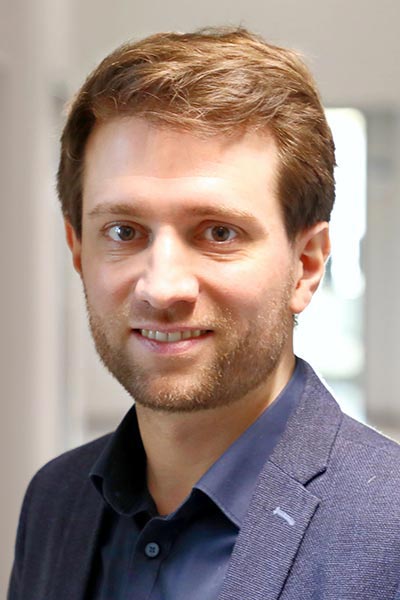
Chaired by Jakob N. Kather, PhD, MSc, of Technische Universität Dresden, the session will take place on Monday, April 20, from 8 to 10 a.m. PT in Hall H on the ground level of the San Diego Convention Center.
“We are at an inflection point. Foundation models trained on massive biological and clinical datasets are beginning to capture patterns that were previously invisible, across histopathology, genomics, single-cell data, and clinical records. At the same time, AI agents are emerging that can autonomously execute complex research workflows,” said Kather. “We ask a simple question: How do these technologies change what is possible in cancer research and patient care?”
Though computational methods, such as bioinformatics, have long been a fixture of cancer research, the advantages that AI can provide researchers are of a quality unto their own, Kather explained, with greatly reduced need for tools and workflows that scientists must create on their own. “The shift is from human-designed analysis to models that discover structure in data on their own and, increasingly, act on it,” he said.
The autonomous, malleable nature of AI may allow researchers from across the cancer research continuum to bolster their projects’ efficiency and scope, and the variety of possible AI applications is reflected by the session’s four presenters. “We assembled a panel that covers the full spectrum from basic biological models to clinical deployment, so there is something relevant regardless of where you sit on that axis,” said Kather.
Jure Leskovec, PhD, of Stanford University, will present a general-purpose AI tool called Biomni. This tool is capable of autonomously performing a variety of complex research tasks, from bioinformatics analyses to experimental protocol design, using an integrated environment of over 150 specialized tools and databases. Leskovec will speak to how agentic AI can change the way scientists interact with data and accelerate discovery.
Bo Wang, PhD, of the University of Toronto in Canada, will describe his work on foundation models for single-cell and spatial transcriptomics, including “single-cell GPT” (scGPT) and its recently developed extension, which adds spatial transcriptomics to the model’s analytic capability. He will also discuss AI’s role in the path toward building virtual cell models that can predict how cells might respond to perturbations like drugs or genetic interventions, as well as the large-scale datasets required to successfully build such models.
Suchi Saria, PhD, of Johns Hopkins University, will address the challenges of implementing clinical AI at scale. Drawing on her experience deploying AI-based early warning systems across dozens of U.S. hospitals, she will discuss what it takes to move from promising benchmarks to real-world clinical impact, including building trust, ensuring safety, and integrating AI into clinical workflows.
Faisal Mahmood, PhD, of Harvard Medical School, will present his group’s work on multimodal foundation models for oncology that integrate patient data from histopathology, radiology, genomics, and clinical records. He will discuss how these models enable new approaches for cancer diagnosis and treatment response prediction.
With AI’s impact on science only seeming to accelerate, “AI Revolution in Cancer Research” stands to benefit anyone working in cancer research who, AI user or not, wants to have an awareness of how their field might change as the AI revolution continues. As Kather emphasized, the session is fundamentally forward-looking. “This is a session about what is working and what is coming next,” he said.
To learn about additional AI developments for cancer research and care, check out the “Eye on AI” series from Cancer Research Catalyst, the official blog of the American Association for Cancer Research.
For the most up-to-date information on session dates, times, and locations, check the Annual Meeting App and Online Itinerary Planner.
More from the AACR Annual Meeting 2026 »
View a photo gallery of scenes from San Diego, join the conversation on social media using the hashtag #AACR26, and read more coverage in AACR Annual Meeting News and on Cancer Research Catalyst, the official blog of the AACR.