Chimeric antigen receptor (CAR) T-cell therapies have revolutionized the treatment of blood cancers, helping many patients with certain lymphomas, leukemias, and/or multiple myelomas live longer. However, CAR T-cell therapies also have several limitations, including a lengthy manufacturing process, severe side effects, and ineffectiveness against solid tumors. Researchers working to overcome these challenges will speak at the AACR Annual Meeting 2026 during a Special Session jointly organized by the American Association for Cancer Research (AACR) and the American Society of Clinical Oncology (ASCO).
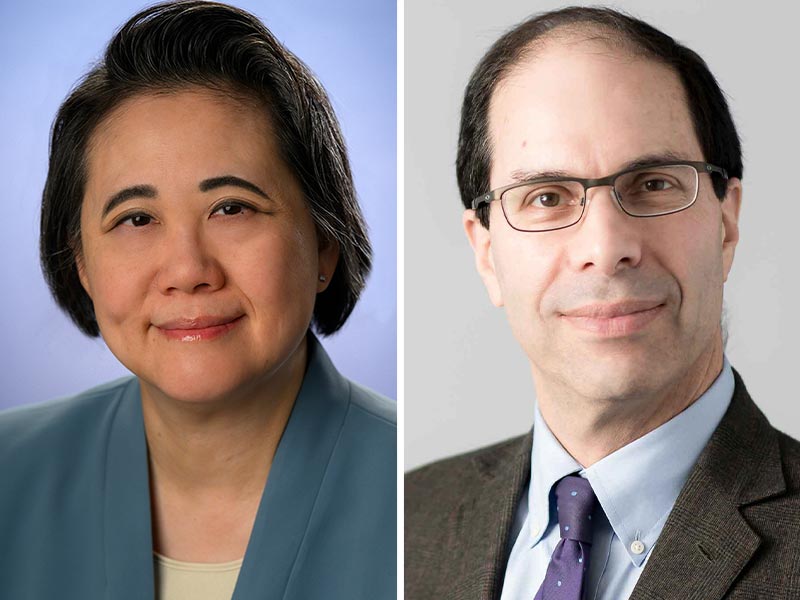
The “AACR-ASCO Joint Session: Next Generation of CAR T-Cell Therapies” will be held on Monday, April 20, from 4:45 to 6:15 p.m. PT, at Ballroom 6 CF in the upper level of the convention center. AACR President Lillian L. Siu, MD, FAACR, of the Princess Margaret Cancer Centre in Canada, and ASCO President Eric J. Small, MD, of the University of California, San Francisco, will serve as the session’s chairs.
“Together, AACR and ASCO cover the whole spectrum of the cancer continuum in their goal to advance cancer care for patients,” Siu said. “This session will go from bench to bedside in looking at how CAR T innovations may eventually impact patients.”
Among the innovations that will be discussed is the progress being made toward in vivo CAR T-cell therapy. The current process for manufacturing CAR T-cell therapies can take three to five weeks as it involves extracting T cells from a patient, engineering them to target cancer cells, expanding these engineered cells, and then infusing them back into the patient. Saar Gill, MBBS, PhD, of the University of Pennsylvania Perelman School of Medicine, is among the researchers working on generating CAR T-cell therapy in vivo—meaning directly in the body.
“In vivo engineering could allow us to circumvent many of the limitations that current ex vivo technologies of CAR T production pose,” Siu explained. “There is a lot of interest in this field, and I am looking forward to Dr. Gill sharing the latest advances.”
Crystal Mackall, MD, FAACR, of Stanford University School of Medicine, has been working on solving the issue of CAR T-cell therapies’ ineffectiveness in solid tumors. Researchers have run into challenges because solid tumors express several different target proteins—many of which are also expressed by healthy cells—making them harder to target with CAR T-cell therapies without risking off-tumor activity. Additionally, the tumor microenvironment (TME) can suppress immune activity. But Mackall has found early success in using CAR T-cell therapy to treat pediatric brain tumors.
“There is much to learn about how CAR T-cell therapies may advance beyond hematological malignancies to treat solid tumors, starting with a pediatric patient population and ultimately applying to an adult population,” Siu said.
Researchers are also making progress in improving the effectiveness of these therapies through precision engineering. One approach is using CRISPR-based editing to arm CAR T cells with additional molecules that can make the suppressive TME more amendable to an immune attack and ensure the treatment reaches the tumor, thus limiting toxicity and the likelihood of side effects like cytokine release syndrome. Phil K. Darcy, PhD, of the Peter MacCallum Cancer Centre in Australia, will discuss his work in this area.
“This has really become a theme across all therapeutics—finding ways to dial up the activity while dialing down the toxicity,” Siu said. “Dr. Darcy will share his research in optimizing the benefit to risk ratio for CAR T-cell therapy.”
Additional sessions at the meeting will dive into other high-interest areas in CAR T-cell therapies. “Role of the Intestinal Microbiome in CAR T-Cell Therapy,” on Monday from 10:15 to 11:45 a.m. PT, will look at how the microbiome might be harnessed to improve response rates. “Off-the-Shelf Cell Therapies for Cancer and Beyond,” on Tuesday, April 21, from 12:30 to 2 p.m. PT, includes presentations on allogeneic CAR T-cell therapies that could be produced from donor cells—making them more readily available than ones that require a patient’s own T cells. And poster sessions on Monday and Tuesday morning will feature studies on “CAR T Cell Targets and TME Reprogramming” and “CAR T Cell Functional Enhancement,” respectively.
For the most up-to-date information on session dates, times, and locations, check the Annual Meeting App and Online Itinerary Planner.
More from the AACR Annual Meeting 2026 »
View a photo gallery of scenes from San Diego, join the conversation on social media using the hashtag #AACR26, and read more coverage in AACR Annual Meeting News and on Cancer Research Catalyst, the official blog of the AACR.