Each year, the AACR Annual Meeting offers attendees a glimpse at the therapeutics that may soon reshape the oncology landscape. Among the most anticipated events on the program are the New Drugs on the Horizon sessions—a three-part series that pulls back the curtain on cancer therapeutics that have recently entered, or are on the verge of entering, phase I clinical trials. This year, the sessions return with another slate of 12 innovative agents spanning a breadth of modalities and molecular targets, each being publicly disclosed for the very first time.
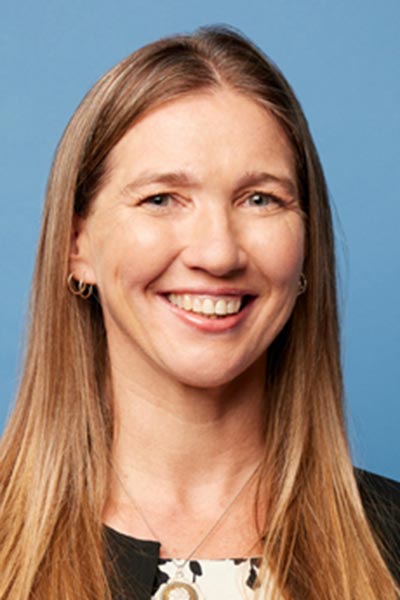
Organized by the AACR Chemistry in Cancer Research Working Group (CICR), the New Drugs on the Horizon series has become a vital part of the Annual Meeting since its inception in 2005, drawing scientists, clinicians, and drug developers eager to see what is coming next. “New Drugs on the Horizon is a roadmap of the next generation of cancer therapeutics that are entering the clinic for patients,” said Danette L. Daniels, PhD, of Foghorn Therapeutics and chair-elect of CICR. “With the first chemistry disclosures, it is an opportunity for companies to showcase their creativity and innovation in medicinal chemistry and drug design, and for participants to see a first glimpse of a new compound or biologic.”
The three sessions will feature presentations from researchers representing a range of biotechnology and pharmaceutical companies, each unveiling the chemical or biological structure of their agent alongside key data from their drug discovery programs and details on ongoing or planned clinical development. Abstracts for these talks are not released until the day of the presentation—and Daniels encourages attendees to plan accordingly. “They are packed, so arrive early,” she said. “These are often destination sessions for many in attendance.”
This year’s presentations reflect the breadth of strategies now being deployed against cancer. The program has long featured a strong mix of small molecules and biologics, but the modality landscape has grown considerably more diverse. “Now we start to see bispecific and trispecific antibodies, as well as novel antibody-drug conjugates entering the picture,” said Daniels, noting that now, macrocyclics, peptide inhibitors, molecular glues, and bifunctional degraders additionally complement standard enzymatic inhibitors.
Equally striking is the expansion of druggable targets. “The targets that we are seeing now being drugged has expanded to those which were thought to be historically intractable—it truly is an exciting time both in terms of chemistry advancements as well as target scope and cancer indications that we can now address,” explained Daniels.
“Everyone in attendance at the conference—from chemists to biologists to physicians—will benefit,” said Daniels. “These sessions highlight the cutting edge of what is coming next for the clinic, and along with the important first disclosure information there will be accompanying biology demonstrating efficacy and mechanism of the new agents in preclinical or early clinical studies.” It is also a competitive slot at the meeting to secure: “A first disclosure at AACR in these sessions is quite prestigious,” she noted, adding that agents first disclosed in these sessions have gone on to advance through clinical development and, in some cases, reach regulatory approval.
In addition to the New Drugs on the Horizon sessions, CICR also coordinated the “Chemistry to the Clinic” Educational Sessions that took place on Saturday and which will remain available for on-demand viewing on the virtual meeting platform through October. CICR is also hosting a Town Meeting in conjunction with the AACR Hematologic Malignancies Working Group (HMWG), which will be held Monday evening. “I particularly recommend this for newcomers to the AACR Annual Meeting. It will be our first joint Town Meeting of the CICR with the HMWG and it is set to be a special one—it is really an opportunity to join the conversation, with a panel discussion and a reception that follows,” said Daniels.
For the most up-to-date information on session dates, times, and locations, check the Annual Meeting App and Online Itinerary Planner.
New Drugs on the Horizon Sessions
DDT01: New Drugs on the Horizon: Part 1
Sunday, April 19, 1-2:30 p.m. PT
Ballroom 20 CD – Upper Level – Convention Center
Session Chairs: Lori S. Friedman, PhD, ORIC Pharmaceuticals, and Lawrence G. Hamann, PhD, Interdict Bio
DDT02: New Drugs on the Horizon: Part 2
Sunday, April 19, 3-4:30 p.m. PT
Ballroom 20 CD – Upper Level – Convention Center
Session Chairs: Danette L. Daniels, PhD, Foghorn Therapeutics, and Monica Schenone, PhD, Pfizer
DDT03: New Drugs on the Horizon: Part 3
Monday, April 20, 10:15-11:45 a.m. PT
Ballroom 20 CD – Upper Level – Convention Center
Session Chairs: Katrina L. Jackson, PhD, C4 Therapeutics, and Daniel Seungduk La, PhD, Triana Biomedicines
Town Meeting
TM03: From Molecules to Medicine—Driving Breakthroughs in Blood Cancer Treatment: A CICR-HMWG Town Hall
Monday, April 20, 6:30-8:30 p.m. PT
Room 28 – Upper Level – Convention Center
This session will be hosted by the CICR and HMWG. It will feature presentations from leading experts followed by a dynamic panel discussion. The session will also include a networking reception at the conclusion of the program.
Chemistry to the Clinic Educational Sessions
ED08: Chemistry to the Clinic Part 1 of 4: The Next Generation of Conjugates: Innovative Chemistry and Beyond—Cytotoxic Payloads in Cancer Therapy
The session recording is available on the virtual meeting platform through October 2026 for all registered attendees.
Session Chair: Xueqing Wang, PhD, AbbVie
Recent breakthroughs in antibody-drug conjugate design have catalyzed a transformative paradigm shift in precision oncology. This session explored the innovative chemistry and engineering principles driving the next generation of conjugates that utilize payloads beyond traditional cytotoxic agents.
ED09: Chemistry to the Clinic Part 2 of 4: Beyond Inhibition: The Next Frontier in Proximity-Inducing Therapies
The session recording is available on the virtual meeting platform through October 2026 for all registered attendees.
Session Chair: Michael A. Erb, PhD, The Scripps Research Institute
Proximity pharmacology can facilitate the degradation of therapeutically relevant proteins, assemble transcriptional regulatory complexes to activate dormant gene expression pathways, and shuttle proteins to non-native cellular compartments. This session covered neomorphic pharmacological modalities that promise new breakthroughs for therapeutics, as highlighted by clinical data for target protein degradation and emerging platforms such as regulated induced proximity targeting chimeras (RIPTACs).
ED06: Chemistry to the Clinic Part 3 of 4: Novel Modalities, Targets, and Mechanisms in Drugging Oncogenic Pathways
The session recording is available on the virtual meeting platform through October 2026 for all registered attendees.
Session Chair: Aimee Usera, PhD, Delphia Therapeutics
This session explored orally bioavailable peptide macrocycles disrupting intracellular protein-protein interactions, structure-guided small-molecule inhibition of DHX8, and a therapeutic strategy called activation lethality.
ED10: Chemistry to the Clinic Part 4 of 4: From Transcript to Protein—New Frontiers in Drug Discovery
The session recording is available on the virtual meeting platform through October 2026 for all registered attendees.
Session Chair: Ryan Potts, PhD, Amgen
Many high‑impact cancer drivers remain inaccessible to traditional drug discovery because they lack clear ligandable sites and act through complex, dynamic mechanisms such as transcriptional dysregulation, shifting protein abundance, and context‑dependent signaling. This session explored emerging approaches that reprogram transcriptional and epigenetic networks, modulate protein fate through proximity-based mechanisms, and exploit tissue-specific biology—expanding therapeutic reach by redefining druggability as dynamic biological control rather than simple target inhibition.
More from the AACR Annual Meeting 2026 »
View a photo gallery of scenes from San Diego, join the conversation on social media using the hashtag #AACR26, and read more coverage in AACR Annual Meeting News and on Cancer Research Catalyst, the official blog of the AACR.