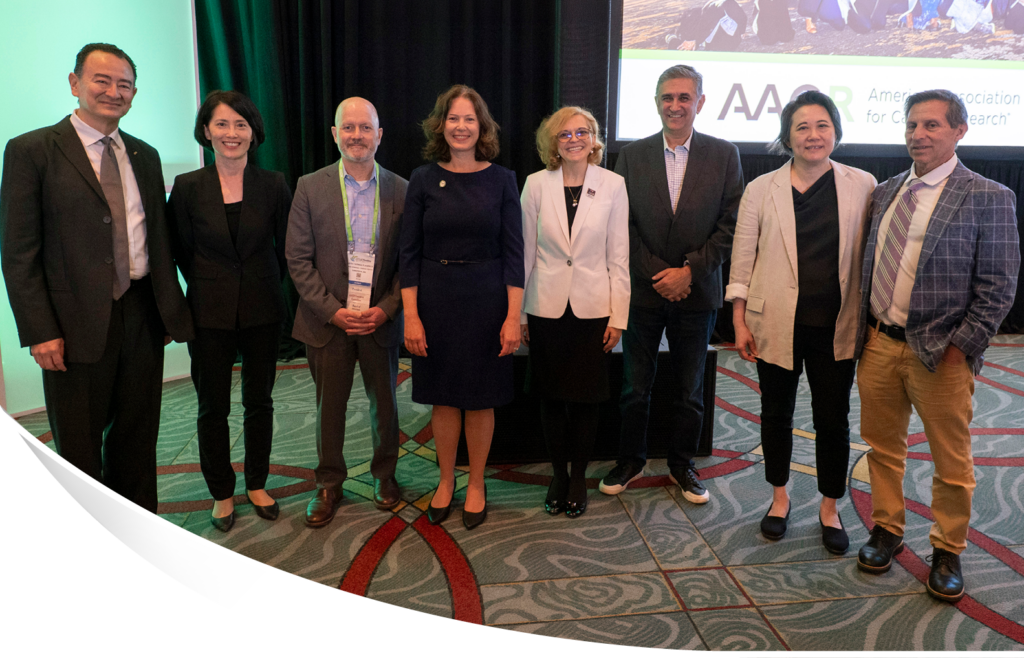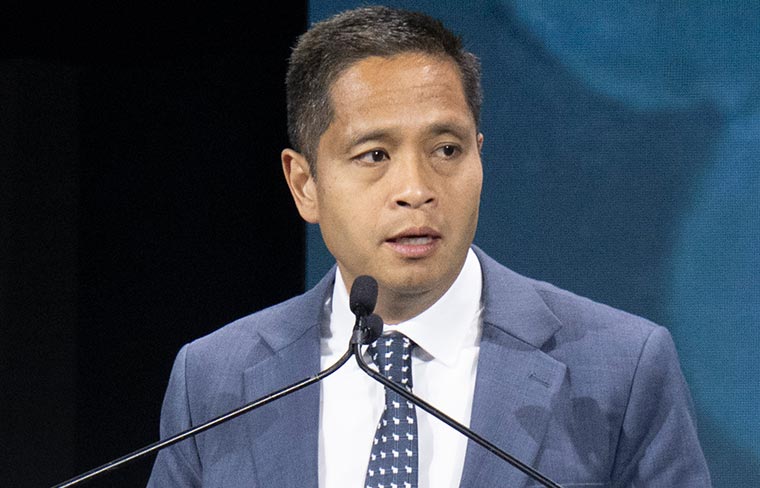

The Plenary Session “Innovative Treatment Modalities: Shaping the Future of Oncology,” which opened the last day of the AACR Annual Meeting 2026, shone a light on radiopharmaceuticals, next-generation biologics, and cellular immunotherapy as groundbreaking therapeutic modalities for cancer, with a focus on solid tumors.
“Precision medicine is no longer about matching a drug with a target, it’s about selecting the right therapeutic platform for the biology in front of us,” said Session Chair Katayoun Rezvani, MD, PhD, of The University of Texas MD Anderson Cancer Center. She emphasized that the approaches highlighted in this session represent complementary strategies that can further expand the reach of precision medicine.
The first presenter, Martin G. Pomper, MD, PhD, of University of Texas Southwestern Medical Center, focused on radiotheranostics.

Reflecting on the role of these agents, Pomper explained how they differ from other precision medicine approaches, such as those based on genomic or epigenomic analysis. “I look at genetics as on-the-ground intelligence about the patient, whereas with imaging we have spatial information so we can design guided missiles to be able to take out various malignant lesions very specifically, going after specific targets,” he said.
Radiotheranostics consists of combining next-generation imaging approaches that can detect very small lesions with radioligand therapy to target these lesions for radiochemical debulking. Pomper explained that radiotheranostic agents are synthesized and optimized using the tools of medicinal chemistry to address biologically relevant, tumor-specific targets with high affinity and specificity and suitable pharmacokinetics.
Pomper pointed out that numerous new radiotheranostics targeting the PSMA and SSTR2 antigens are currently in clinical development for prostate cancer, and many additional targets are being investigated at the preclinical stage. Furthermore, while beta emitters are in widespread use now, research is exploring alpha emitters such as astatine, which provide localized, high-energy radiation with a short tissue range and are ideal for precision treatment.
In reviewing the future directions for the field, Pomper said that integrating artificial intelligence will be important at multiple stages of radiotheranostic development, including determination of target affinity, ligand design, pharmacokinetic prediction, and image reconstruction and quantification.

Next up, Raffaele Colombo, PhD, of Zymeworks Inc., traced the evolution of antibody-drug conjugates (ADCs) from early concepts to next-generation cancer therapies.
Colombo emphasized how, as the clinical landscape of ADCs has evolved, our understanding of their complexity has also grown. While in the early days of their development, ADCs were regarded as magic bullets that only hit the tumor, imaging has shown that the absolute uptake by the tumor tissue is very low, and the vast majority ends up being adsorbed by normal tissues. Based on this new understanding of ADC disposition, researchers are fine-tuning several aspects of their design, including the potency of the payload and the stability of the linker. As an example of this optimization process, Colombo reviewed ZW191, a novel ADC developed by his team with a moderate potency payload and optimized for internalization and tumor penetration, which showed efficacy in patients with ovarian cancer and endometrial cancer, as discussed during a Clinical Trials Minisymposium. The preclinical activity and tolerability profiles of ZW191 were described in a paper published in Clinical Cancer Research, a journal of the American Association for Cancer Research.
According to Colombo, the next generation of ADCs will aim to go after new targets, advance new drug-like payloads, identify biomarkers for patient selection, and develop novel tumor-specific linkers. Colombo added that next-generation ADCs will be multidimensional because they will include multiple targets, multiple payloads, and utilize multiple biomarkers.

Angela Coxon, DPhil, of Amgen, reviewed the evolution of T-cell engagers (TCEs) and the role of protein engineering in driving TCE innovation.
TCEs are bispecific antibodies with two arms, one of which binds to CD3 on a T cell, and the other binds to a tumor antigen, inducing cancer-cell killing.
Coxon discussed the challenges associated with the application of TCEs for solid tumors, including target expression on normal cells, target heterogeneity within the tumor, the immunosuppressive tumor microenvironment, and poor penetration within tumor tissue. Researchers are relying on protein engineering to address these limitations and design new TCEs that are better suited for solid tumors.
For example, tarlatamab (Imdelltra), a TCE approved by the U.S. Food and Drug Administration (FDA) for extensive-stage small cell lung cancer, targets DLL3, whose expression is restricted to tumor cells. Tarlatamab was designed to have a prolonged half-life to allow for intermittent dosing. Combination strategies of tarlatamab with anti-PD-1 therapy and other therapies are under investigation.
In the case of STEAP1, a target which is present on prostate cancer cells but also on normal tissues, the researchers engineered xaluritamig, a molecule with two target-binding domains, relying on avidity to ensure activity only against cells with high expression of STEAP1.
Another strategy to improve tumor specificity is dual-targeting TCEs, which are active against tumor cells that express both of the therapeutic’s targets while exerting minimal activity on normal cells that express only one of the targets. This is the case with AMG 305, which targets MSLN and CDH3. “We think these engineering innovations are going to allow us to expand other molecules into new indications and patient populations,” concluded Coxon.

The last presenter of the session was John B.A.G. Haanen, MD, PhD, of Netherlands Cancer Institute, who provided an update on tumor-infiltrating lymphocyte (TIL) therapy for solid tumors, especially melanoma.
Adoptive cell therapy with TILs is a personalized autologous treatment in which a metastatic lesion resected from a patient is fragmented and digested to isolate TILs that are then expanded in vitro and infused back in the patient after lymphodepleting chemotherapy.
The TIL therapy lifileucel (Amtagvi) was approved by the FDA for patients with certain melanomas, but there is no approved TIL therapy in Europe, Haanen said.
His team conducted a phase III randomized controlled trial in Europe in which an investigational TIL therapy was compared head-to-head with a standard-of-care immune checkpoint inhibitor. The study showed that TIL therapy induced longer progression-free survival and higher overall response rate. Furthermore, real-world data from TIL therapy in more than 130 patients with anti-PD-1-refractory disease who were not enrolled in the trial but were treated at the same institutions as the trial showed similar outcomes to those observed in clinical trial patients. Haanen advocated for TIL therapy to become a standard of care everywhere in the world for patients with metastatic melanoma, adding that an application for marketing authorization based on the phase III clinical trial data is currently under review by the European Medicines Agency.
In the second part of his presentation, Haanen described his research efforts to characterize the population of TILs infused into patients, which he compared to a black box: it is known that the TIL population contains an endogenous intratumoral T-cell receptor (TCR) repertoire that is able to recognize the tumor cells, but the T-cell populations responsible for the antitumor response remain unclear, he said.
Studying the TCR repertoire of TILs from patients who had responses to TIL therapy and from those who did not, the team found an abundance of TCRs targeting tumor-associated antigens and neoantigens among the TILs collected from patients with responding tumors. Through a multiomics approach, the researchers also demonstrated that the tumor-reactive TILs found in patients with responding tumors had high CD25 expression and a specific transcriptional profile. Haanen concluded that the T-cell features within the tumor are predictive of clinical outcome, and this knowledge should be utilized in the design of next-generation TIL therapies.
The recording of the full session is available on demand for registered Annual Meeting attendees through October 2026 via the virtual meeting platform.

More from the AACR Annual Meeting 2026 »
View a photo gallery of scenes from San Diego, join the conversation on social media using the hashtag #AACR26, and read more coverage in AACR Annual Meeting News and on Cancer Research Catalyst, the official blog of the AACR.