To help further the professional advancement of early-career researchers, the American Association for Cancer Research (AACR) launched the NextGen Stars Program in 2014. Each year, graduate students, postdocs, and assistant professors are selected to present their work during highly visible sessions at the AACR Annual Meeting.
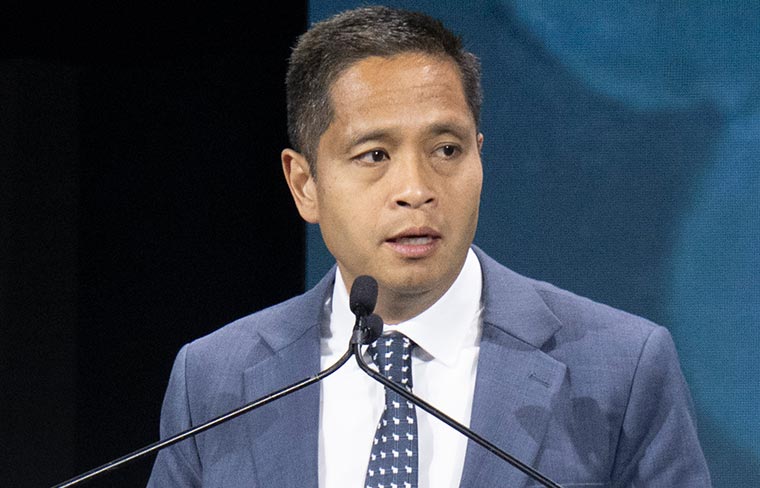
This year’s class of NextGen Stars includes 11 individuals spanning different areas of cancer research. Learn more about the work of Daniel D. Azorín, PhD, below, and check out Q&As with the other NextGen Stars to discover their research focus.
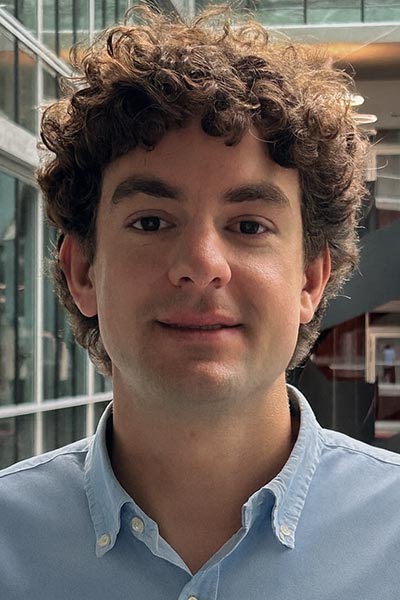
Daniel D. Azorín, PhD
AACR NextGen Stars Class of 2026
Postdoctoral Researcher
ETH Zurich, Basel, Switzerland
Abstract Presentation:
Screening for tumor microtube-targeting drugs identifies PKC modulators as multipotent inhibitors of glioblastoma progression
Session Details:
AOS04: Advances in Glioblastoma Research and Experimental Therapies
Monday, April 20, 10:15-11:45 a.m. PT
Room 15 – Mezzanine Level – Convention Center
What is the subject of your research?
My research focuses on cancer neuroscience and on understanding how tumor cells communicate with each other and with the nervous system. In glioblastoma, I study how cancer cells form functional, neural-like networks that promote invasion and therapy resistance. More recently, I have also become interested in tumors outside the central nervous system, particularly in how the peripheral nervous system interacts with cancers such as colorectal cancer and liver metastases.
What sparked your interest in this area of research, and why is it important?
My interest was sparked by the remarkable capacity of brain tumor cells to communicate and coordinate their behavior. Rather than acting as isolated cells, they form interconnected networks that “talk” to each other and help the tumor survive and resist treatment. This challenged my initial view of cancer and made me realize that malignancy can be a collective, network-driven process.
At the same time, the broader field of cancer neuroscience deeply fascinated me, especially the idea that nerves and external stimuli, such as stress, can influence tumor biology. Understanding how neural activity shapes cancer behavior is important because it reveals entirely new vulnerabilities that cannot be addressed by conventional therapies alone.
Where would you like to see your area of research be in five years?
In five years, I would like to see the field routinely combining live functional imaging with spatial and single-cell multiomics, including transcriptomics and proteomics. By integrating videos of tumor activity with spatially resolved molecular profiles, we will be able to link function to identity and reconstruct tumors as living systems.
For cancer neuroscience in the peripheral nervous system, I hope to see the development of novel interventional strategies, including bioelectronic approaches. For example, small devices that modulate vagal nerve activity (currently used in inflammatory diseases) could one day be adapted for cancer therapy. This would represent a major step toward neuromodulation-based treatments.
What (or who) inspired you to apply for the NextGen Stars program?
I was inspired by the outstanding scientists selected as NextGen Stars in previous years, whose work I greatly admire. I was also strongly encouraged by my PhD supervisor, Frank Winkler, PhD, whose pioneering contributions to cancer neuroscience were recognized with the Brain Prize by the Lundbeck Foundation in 2025.
In addition, my positive experiences with AACR motivated me to apply. Receiving the Scholar-in-Training Award allowed me to attend the AACR Annual Meeting 2023 in Orlando, Florida, and I am deeply grateful for the trust and support AACR has shown in my development as a researcher.
What do you hope to take away from your experience as a NextGen Star and your time at the AACR Annual Meeting?
I hope to build meaningful connections with researchers across disciplines, exchange ideas, and establish collaborations that will help advance this emerging field. I am excited to learn from leaders in cancer biology, neuroscience, and translational research, and to broaden my perspective on how network-based concepts can be brought to patients.
Most importantly, I look forward to contributing to and expanding the collective understanding of cancer neuroscience, both within and beyond the brain, and to growing as a scientist through this unique experience.