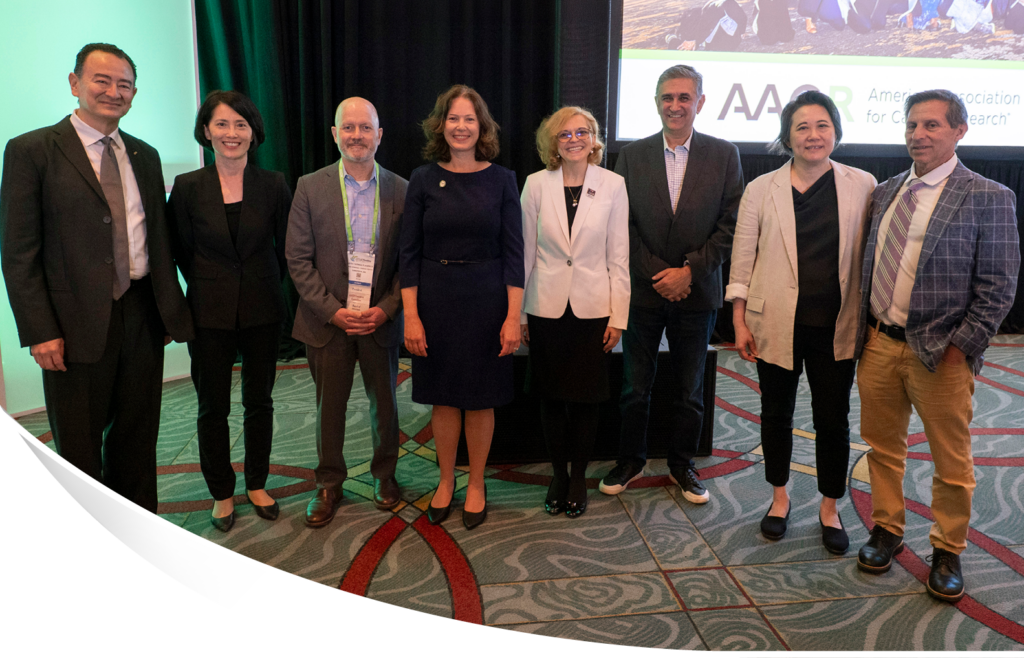

The third Clinical Trials Plenary Session at the AACR Annual Meeting 2026 was dedicated to “Cellular Therapies and Complex Immunotherapies” and provided updates on sophisticated immunotherapeutic strategies, with special emphasis on their application for solid tumors. The session was co-chaired by James L. Gulley, MD, PhD, of the National Cancer Institute, and Robert H. Vonderheide, MD, DPhil, FAACR, of the University of Pennsylvania Abramson Cancer Center, who is the AACR President-Elect for 2026-2027. “We are really in for a treat with an interesting variety of clinical data this morning,” said Gulley introducing the session.
Related Coverage:
- First Clinical Trials Plenary featured latest precision oncology therapies
- Second Clinical Trials Plenary highlighted results of next-generation antibody-drug conjugates
- Fourth Clinical Trials Plenary Session highlighted emerging developments in immunotherapy
Can CAR T-cell therapy intercept disease in patients with smoldering myeloma?
The first presenter Omar Nadeem, MD, of Dana-Farber Cancer Institute, discussed results of the CAR-PRISM trial, which evaluated the use of ciltacabtagene autoleucel (Carvykti) in patients with high-risk smoldering myeloma, an early, asymptomatic form of multiple myeloma. Ciltacabtagene autoleucel is a B-cell maturation antigen (BCMA)-directed chimeric antigen receptor (CAR) T-cell therapy approved for second-line treatment of relapsed/refractory multiple myeloma.

“Due to its efficacy in relapsed multiple myeloma, and the fact that it is given as a single infusion, we reasoned that ciltacabtagene autoleucel could be a practical and effective approach for patients with high-risk SMM to intercept the disease before the patient develops any symptoms,” said Nadeem. “The other rationale was that the T cells are fitter during this early disease state, and so the efficacy of CAR T-cell therapy may be even greater when administered during SMM, when the immune system is more robust.”
The CAR-PRISM trial enrolled 20 patients with high-risk SMM based on the proportion of plasma cells in their bone marrow and the amount of plasma-cell protein products in their blood. All patients treated with ciltacabtagene autoleucel experienced low-grade cytokine release syndrome (CRS), and no patients had grade 3 or higher CRS. The most common adverse events were transient hematologic toxicities, including grade 3 or 4 neutropenia. Non-immune effector cell-associated neurotoxicity syndrome (non-ICANS) neurologic toxicities occurred in seven patients: facial nerve palsy in four patients that resolved completely, and residual, but improved, mild motor symptoms in three patients.
Within two months of treatment, all 20 patients had experienced minimal residual disease (MRD) negativity, which was sustained at a median follow-up of 15.3 months. Six patients who were followed for longer than 18 months continued to experience MRD negativity. No disease progression or deaths were observed during follow-up.
“In this pilot study, a one-time infusion of ciltacabtagene autoleucel—without any induction or bridging therapy—led to universal MRD negativity,” said Nadeem. “No instances of disease progression have been observed after a median follow-up of 15.3 months, far exceeding the progression-free survival we would expect with active monitoring.
“These results support our hypothesis that administering CAR T-cell therapy earlier—before the onset of active multiple myeloma—can lead to deep responses,” he added. “Our hope is that these responses continue to be durable in the long term to the point where we can say that patients are cured.”
KIR-CAR T-cell therapy with an on-and-off switch mechanism to limit T-cell exhaustion

The following presentation, by Janos L. Tanyi, MD, PhD, of the University of Pennsylvania Abramson Cancer Center, focused on initial results of a first-in-human dose-escalation study of SynKIR-110, a novel type of CAR T-cell therapy, in patients with advanced mesothelin-expressing solid tumors.
With few exceptions, traditional single-chain CAR T-cell therapy has generally failed to treat solid tumors and demonstrated both on- and off-target toxicities, said Tanyi. Unlike traditional single-chain CAR T-cell therapy, multichain killer immunoglobulin-like receptor (KIR)-CAR T cells are designed to have the extracellular target-binding domain separate from the intracellular costimulatory domain. The split receptor design provided a natural on-and-off switch mechanism that allows for T-cell recovery and helps prevent exhaustion, Tanyi added.
He showed in vitro data demonstrating that KIR-CAR-transduced T cells retained similar minimal activation and exhaustion markers as untransduced T cells and displayed a more specific and more effective activation response than single-chain CAR T cells. This translated into increased antitumor efficacy in a patient-derived mesothelioma mouse model.
Tanyi reviewed interim trial results from nine patients treated at the first three dose levels in the dose-escalation phase of the clinical trial of SynKIR-110. Treatment was well tolerated with no dose-limiting toxicities, and only three patients experienced low-level cytokine release storm. Persistence of KIR-CAR T cells in the blood of patients increased with dose, and tumor reductions were observed with escalating doses, with one patient experiencing a partial response that is ongoing after many months, said Tanyi. Overall, the disease stabilization rate was 55% with the early low doses. Based on these results, patient enrollment for the next dose-escalation steps is ongoing, concluded Tanyi.
A combinatorial immunotherapy strategy to boost T-cell function
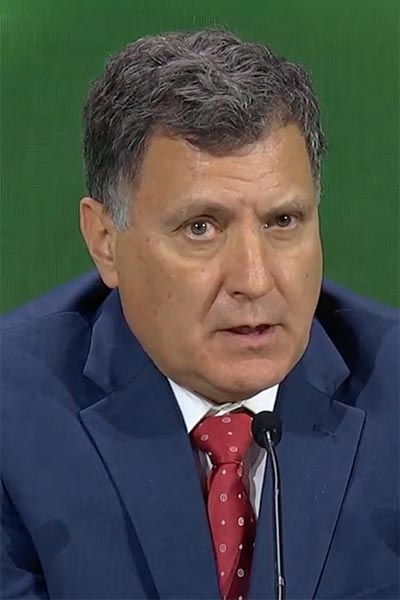
Ignacio Melero, MD, PhD, of Clinica Universidad de Navarra in Spain and the University of Oxford in the United Kingdom, discussed results of a phase I trial assessing the combination of a targeted immune costimulatory therapy and a bispecific antibody-based therapy in microsatellite-stable (MSS) colorectal cancer.
Cibisatamab is a carcinoembryonic antigen-targeting T-cell bispecific antibody that has shown signs of clinical activity in patients with MSS or proficient mismatch repair (pMMR) metastatic colorectal cancer (mCRC) that progressed after prior therapies. FAP-4-1BBL is a fibroblast activation protein (FAP)-targeted agonist of 4-1BB that provides a costimulatory signal for T-cell activation in FAP-expressing tissues. Increased intratumoral T-cell infiltration correlated with modest clinical activity with FAP-4-1BBL treatment, Melero said.
He and colleagues hypothesized that tumor-directed 4-1BB agonism may enhance T-cell proliferation and activation induced by cibisatamab and improve the metabolic fitness of activated T cells, resulting in increased antitumor activity. They assessed the combination of cibisatamab and FAP-4-1BBL in patients with MSS or pMMR mCRC.
Melero reported that the adverse events were manageable and consistent with the proposed mechanism of action of the combination therapy. Pharmacodynamic studies indicated that tumors shifted away from an immune desert phenotype toward more immune-engaged states. Partial responses were observed across all dose levels, including in patients with liver metastases. Melero concluded that the combination is clinically feasible with early signals of activity, although the optimal dose has yet to be identified and survival data is not available yet.
An mRNA-based immunotherapy in combination with checkpoint inhibition for first-line treatment of melanoma

Another complex immunotherapy-based combination was discussed by Pavlina Spiliopoulou, MD, PhD, of University of Glasgow in the United Kingdom, who shared results from the phase I/II study of mRNA-4359, an experimental mRNA-based cancer antigen therapy, plus pembrolizumab (Keytruda) for first-line treatment of locally advanced or metastatic melanoma.
Immune checkpoint inhibitor therapy revolutionized the treatment of this disease, yet many patients do not respond or develop resistance over time. Spiliopoulou explained that mRNA-4359 was designed to address immune resistance by priming and expanding T cells to simultaneously kill PD-L1-positive and IDO1-positive tumor cells and deplete the immunosuppressive cells that protect them. “We recently presented data on the combination of pembrolizumab plus mRNA-4359 in patients with immunotherapy-resistant advanced melanoma,” said Spiliopoulou. The combination had a manageable safety profile and antitumor activity, she added.
The focus of today’s presentation was on new study results from 12 therapy-naïve patients after a median follow-up of 54 weeks. Seven of the patients discontinued treatment due to adverse events or progressive disease, and five patients remain on treatment. The adverse events related to mRNA-4359 treatment were mostly low grade, and 33% of patients experienced grade 3-4 adverse events related to pembrolizumab treatment, which led to pembrolizumab discontinuation in 25% of cases. Spiliopoulou reported an objective response rate of 83% and a disease control rate of 92%. Median duration of response has not been reached, and time to response was six weeks. Pembrolizumab monotherapy in the seminal studies had an ORR of 35% to 40%, said Spiliopoulou. “So this 83% response rate compares very favorably, but this is an extremely small sample size.”
Only three participants experienced progression at the time of data cut-off, while most patients are still being monitored with no signs of progression. A sizable reduction in tumor burden was observed in the majority of patients irrespective tumor PD-L1 expression at baseline. Molecular studies showed antigen-specific T-cell responses and increased de novo clonal T-cell receptor expansion.
Spiliopoulou concluded that, despite the small sample size, findings from this analysis support further clinical development of mRNA-4359 for this patient population.
The recording of the full session is available on demand for registered Annual Meeting attendees through October 2026 via the virtual meeting platform.
More from the AACR Annual Meeting 2026 »
View a photo gallery of scenes from San Diego, join the conversation on social media using the hashtag #AACR26, and read more coverage in AACR Annual Meeting News and on Cancer Research Catalyst, the official blog of the AACR.