Rounding out the Clinical Trials Plenary Session program at AACR Annual Meeting 2026 was a dedicated discussion on an ever-evolving area of cancer treatment: immunotherapy.
The fourth and final Clinical Trials Plenary Session, “Advances in Immunotherapy,” covered clinical trial data on possible new durvalumab (Imfinzi) indications, preliminary first-in-human results for denikitug in advanced solid tumors, and immunotherapy resistance mechanisms in non-small cell lung cancer (NSCLC).
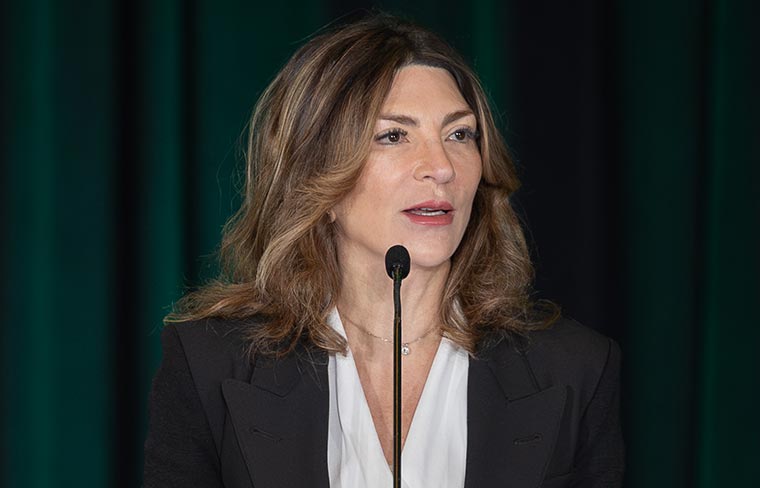
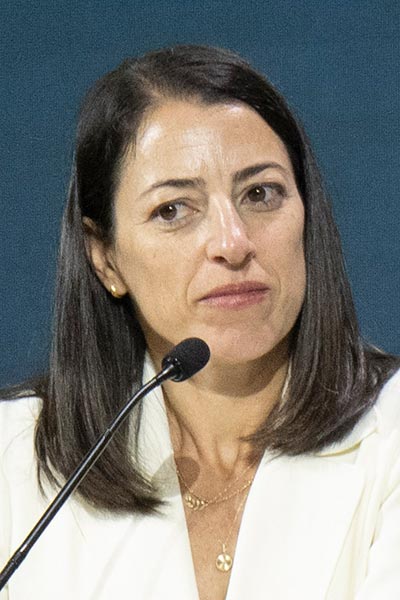
Session Co-chair Evanthia Roussos Torres, MD, PhD, of the University of Southern California Keck School of Medicine, introduced the session.
Related Coverage:
- First Clinical Trials Plenary featured latest precision oncology therapies
- Second Clinical Trials Plenary highlighted results of next-generation antibody-drug conjugates
- Third Clinical Trials Plenary Session delved into next-generation cellular therapies and immunotherapies
Organ preservation in gastric and gastroesophageal junction cancer with combination immunotherapy
First up was presenter Alberto Giovanni Leone, MD, of the Fondazione IRCCS Istituto Nazionale dei Tumori in Italy, who shared results from cohort two of the single-arm, nonrandomized phase II INFINITY clinical trial. The trial aimed to assess a combination treatment of tremelimumab (Imjudo) and durvalumab—two immune checkpoint inhibitors—as an alternative to surgery for patients with resectable gastric or gastroesophageal junction carcinoma (GC/GJC) that presented with high microsatellite instability.

Cohort two of the trial enrolled 18 patients with resectable microsatellite instability-high, mismatch repair-deficient, and Epstein-Barr virus-negative GC/GJC. Patients received 300 mg of tremelimumab with 1,500 mg of durvalumab on day one, followed by additional 1,500 mg doses of durvalumab on days 29 and 57. Patients were intensively surveilled every 12 weeks for two years.
Three patients experienced grade 3 immune-related adverse events—most commonly, elevated gamma-glutamyl transferase levels. No patients discontinued treatment, and no grade 4 or 5 adverse events were reported.
Two years after the treatment, 17 patients were evaluable for efficacy: 100% of the patients were alive, the clinical complete response rate was 71%, and the progression-free survival (PFS) rate was 94.1%. Additionally, the gastrectomy-free survival rate at two years was 70.6%. Using questionnaires, the researchers also assessed patients’ quality of life throughout the trial, which did not deteriorate significantly. An exploratory analysis of plasma circulating tumor DNA (ctDNA) revealed that 13 out of the 17 evaluable patients had ctDNA positivity at baseline, and 11 of those 13 had ctDNA clearance after treatment.
Improving immune checkpoint inhibitor treatment for lung cancer with a new monoclonal antibody

According to presenter Fabrice Barlesi, MD, PhD, of Gustave Roussy Cancer Campus in France, about 25% of patients with NSCLC are diagnosed at sufficiently early stages that resection is a viable option—especially with the current standard-of-care treatment of neoadjuvant chemotherapy and immune checkpoint inhibitor therapy.
Sharing interim results from the open-label, single-arm phase II MATISSE clinical trial, Barlesi pointed to the need for next-generation strategies that could further improve patients’ outcomes following surgery. The trial tested the safety and efficacy of perioperative IPH5201—a CD39-targeting monoclonal antibody—and durvalumab, alongside neoadjuvant platinum-based chemotherapy.
Barlesi presented data on 40 patients with previously untreated, resectable, stage 2-3A NSCLC without EGFR or ALK mutations who enrolled in the trial. They received four cycles of neoadjuvant treatment comprising IPH5201, durvalumab, and chemotherapy administered once every three weeks. After surgery, 35 patients received adjuvant IPH5201 and durvalumab for up to 12 cycles every four weeks.
During treatment, 55% of patients experienced an adverse event of grade 3 or higher, which led to nine permanent discontinuations of at least one drug in the treatment regimen. One patient died of postoperative pneumonia. Following surgery, the pathological complete response (pCR) rate within the entire 40-patient cohort was 27.5%.
Barlesi highlighted that, for patients with PD-L1 positivity rates of 50% or greater, the pCR rate was 50%. He also noted that baseline CD39+ and CD8+ cell densities within tumors were higher in treatment-responsive patients, suggesting a possible biomarker.
First-in-human results for denikitug as solid tumor therapy
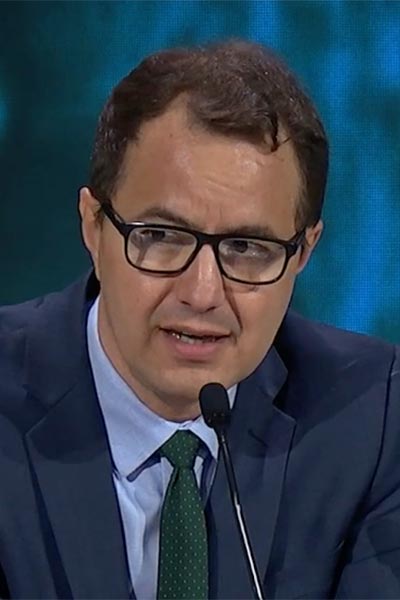
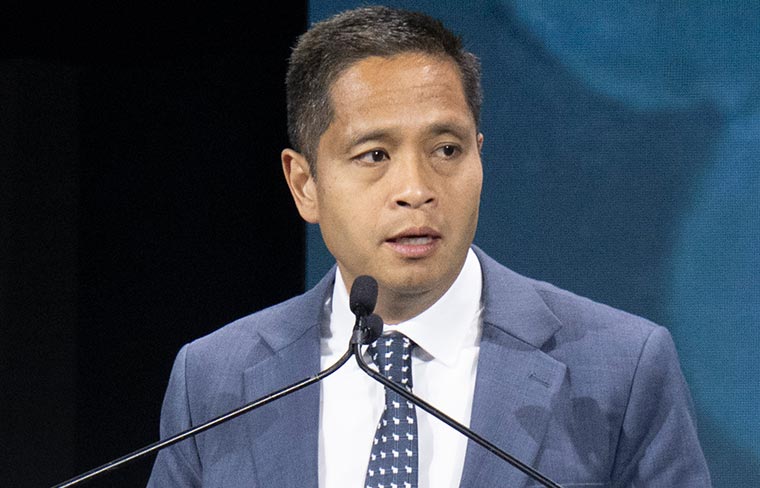
Next came a presentation that covered a drug being tested across multiple indications simultaneously. Bruno Bockorny, MD, of Beth Israel Deaconess Medical Center, shared results from a nonrandomized, open-label phase I clinical trial for the CCR8-targeting antibody denikitug, which is designed to deplete protumor regulatory T cells and facilitate the infiltration of antitumor T cells.
Adults who had adequate organ function and advanced solid tumors that didn’t respond to standard therapies were eligible for the trial, and 57 patients were enrolled. Fourteen patients had NSCLC; 11 patients had GC/GJC; 10 patients had gynecologic cancers; eight patients had breast cancer; five patients had head and neck squamous cell carcinoma; and nine patients had other types of tumors.
The most common treatment-related adverse events (TRAEs) were pruritus and rash. No TRAEs of grades 4 or 5 were reported.
Among the 52 patients evaluable for efficacy, the objective response rate was 8% and the disease control rate was 46%. Responders had received a median of six prior lines of therapy, and patients with disease control had received a median of two prior lines of treatment.
Bockorny then described the pharmacodynamic effects that denikitug caused within patients’ tumor microenvironments based on a cohort of 23 paired biopsies. Denikitug, he showed, led to decreases in the density of CCR8+ regulatory T cells and “a modest increase” in the density of Ki67+ CD8+ T cells.
Resisting treatment resistance in non-small cell lung cancer

The session concluded with a focus on addressing the longstanding problem of treatment resistance to immune checkpoint inhibitor therapy in NSCLC. As presenter Archana Balan, MS, said, resistance to immune checkpoint inhibitors remains a major challenge for the field.
Balan, who is affiliated with the Sidney Kimmel Comprehensive Cancer Center at Johns Hopkins University, presented results of an analysis of biospecimens from the HUDSON clinical trial. The nonrandomized, open-label phase II trial is studying multiple treatment arms for patients with metastatic NSCLC who have progressed on anti-PD-1 and/or -PD-L1 immune checkpoint inhibitor therapies.
Balan and colleagues assessed biospecimens from 951 HUDSON trial participants. Three hundred ninety-three patients had primary resistance to immune checkpoint inhibitor therapy, and 507 patients had acquired resistance. The researchers performed comprehensive multiomic analyses, including targeted next-generation sequencing on unpaired tumor biopsies collected both before and after the onset of immunotherapy resistance.
Balan’s analysis showed that, as resistance to immune checkpoint inhibitor therapy began, tumor cells acquired subclonal genomic alterations. Driver mutations were different between tumor cells that acquired resistance to therapy as compared to tumor cells with primary resistance.
Although both tumor cells with acquired and primary resistance displayed increased genomic instability, the cells with acquired resistance showed hallmarks of phenotypic plasticity, including signs of neuroendocrine differentiation. Stem-like CD8+ T cell clusters were also enriched within tumors with acquired resistance.
Balan concluded that immunotherapy resistance carries an “evolutionary cost”: the changes that they undergo to resist immunotherapy may create newly targetable vulnerabilities.
The recording of the full session is available for registered Annual Meeting attendees through October 2026 on the virtual meeting platform.
More from the AACR Annual Meeting 2026 »
View a photo gallery of scenes from San Diego, join the conversation on social media using the hashtag #AACR26, and read more coverage in AACR Annual Meeting News and on Cancer Research Catalyst, the official blog of the AACR.