A record 265 clinical trials abstracts—from proof-of-concept studies to phase III results—will be presented during this year’s AACR Annual Meeting. The program will include many potentially practice-changing studies and insights from first-in-class therapeutics. To accommodate this abundance of exciting research, this year’s clinical trials program has been expanded to feature five Clinical Trials Minisymposia to go along with four Clinical Trials Plenary Sessions.
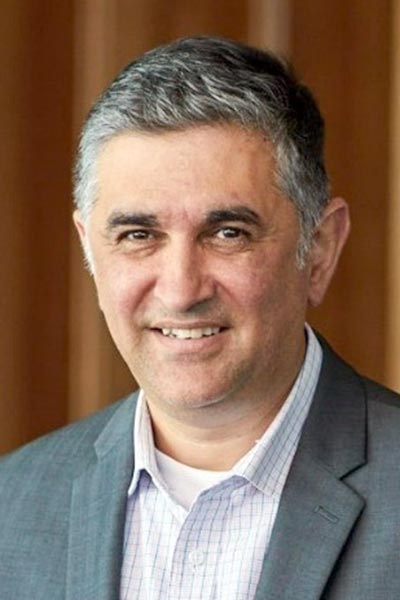
“This year’s clinical trials program will have more sessions than ever, detailing advances that could expand the therapeutic landscape in the years ahead,” said Jayesh Desai, MBBS, from Peter MacCallum Cancer Centre, a co-chair of this year’s Annual Meeting Clinical Trials Committee. “Sessions will feature next-generation targeted therapies translating some of the extraordinary progress in chemistry and drug design, innovations to address treatment resistance, biomarker-driven novel trial approaches potentially changing treatment paradigms, and much more.”
The clinical trials program kicks off today with the first two Clinical Trials Minisymposia on immunotherapies and perioperative clinical trials. The remaining three will follow on Sunday, Monday, and Tuesday, examining advanced cellular and immune-based therapeutics, the use of circulating tumor DNA (ctDNA) to monitor for treatment response and predict outcomes, and advances in precision oncology.
“The expanded number of Minisymposia will provide attendees insights into exciting developments across the spectrum of clinical research, from early-phase results of novel therapeutic strategies, a session focused on biomarker-driven approaches, to long-term updates on approved treatments,” Desai explained.
In the Clinical Trials Plenary Sessions, each trial presentation will be accompanied by presentations from dedicated discussants who will provide context and connect individual studies to broader trends in the field, helping attendees understand how the findings inform future clinical research and therapeutic development. There will be two sessions on Sunday—“New Frontiers in Precision Oncology” from 1 to 3 p.m. PT and “Therapeutic Advances in Antibody-Drug Conjugates (ADCs)” from 3:30 to 5:30 p.m. PT.
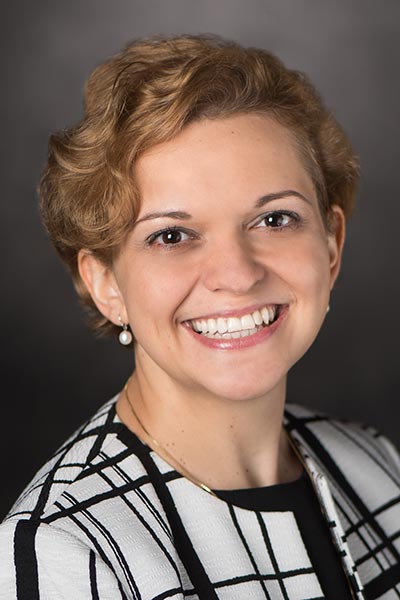
“This year’s New Frontiers in Precision Oncology session underscores how some targets once considered undruggable are becoming actionable through emerging therapeutics and biomarker-guided strategies,” said Ecaterina E. Dumbrava, MD, from The University of Texas MD Anderson Cancer Center, a co-chair of this year’s Annual Meeting Clinical Trials Committee. The session will include a look at inhibitors of KRAS G12C, RAS(ON) G12D, WEE1 and PKMYT1, and Cyclin A/B-RxL.
The ADC session includes data from early-phase clinical trials examining the use of this type of targeted therapies in treating HER2-expressing malignancies, advanced nasopharyngeal carcinoma, platinum-resistant ovarian cancer, and non-small cell lung cancer.
“ADCs have emerged as an important new pillar of oncology with advances in target selection and specificity, linker chemistry, and payload design improving both activity and tolerability,” Dumbrava said. “Highlighting this area is key because ADCs are rapidly expanding across multiple tumor types and have the potential to meaningfully shift treatment standards.”
The third Clinical Trials Plenary Session—“Cellular Therapies and Complex Immunotherapies”—takes place on Monday from 10:15 a.m. to 12:15 p.m. PT. Dumbrava explained that complex immuno-oncology includes approaches that go beyond single-agent checkpoint inhibitors, such as cellular therapies, T-cell engagers, cancer vaccines, and combinations that act on multiple immune pathways.
“We are seeing encouraging progress in the tolerability, efficacy, persistence, and scalability of these therapies,” she added. “These innovations help address long-standing challenges like resistance and limited durability in tumors less responsive to traditional immunotherapy.”
The clinical trials program wraps up on Tuesday from 10:15 a.m. to 12:15 p.m. PT with “Advances in Immunotherapy.” The presentations include the use of immunotherapy to avoid surgery in certain patients with gastric or gastroesophageal junction adenocarcinoma, a multiomic analysis of the mechanisms behind immunotherapy resistance, an approach to overcome resistance to PD-L1 inhibitors, and first-in-human results from an anti-CCR8 antibody.
“Immunotherapy continues to advance through new checkpoint pathways and more refined biomarkers that better guide patient selection,” Dumbrava said. “These approaches are increasingly being brought into neoadjuvant and adjuvant settings to improve long-term outcomes and increase the chances of cure.”
For the most up-to-date information on session dates, times, and locations, check the Annual Meeting App and Online Itinerary Planner.
Clinical Trials Minisymposia
CTMS01: Updates in Anticancer Immunotherapies
Saturday, April 18, 10 a.m.-12 p.m. PT
Ballroom 6 A – Upper Level – Convention Center
Session Chairs: Edward B. Garon, MD University of California, Los Angeles, and Michael Cecchini, MD, Yale School of Medicine
This session will include updates on clinical trials for the anti-IGSF8 antibody GV20-0251, the dual αVβ8 and αVβ1 integrin inhibitor PLN-101095, the anti-CCR8 antibody AMG 355, the IKZF2 degrader DKY709, and tislelizumab in combination with investigational agents. Additional presentations will examine the long-term impact of immune checkpoint inhibitors on patients with melanoma and alveolar soft part sarcoma.
CTMS02: Aiming for Cure: Perioperative Clinical Trials
Saturday, April 18, 12:30-2:30 p.m. PT
Ballroom 6 A – Upper Level – Convention Center
Session Chairs: Alice Y. Ho, MD, MBA, Houston Methodist Research Institute, and Kenneth Kenji Tanabe, MD, Massachusetts General Hospital
This session will include updates on trials examining the use of treatments around the time of surgery, including tucatinib and trastuzumab for rectal adenocarcinoma, zanidatamab for HER2-positive breast cancer, atezolizumab for triple-negative breast cancer, nivolumab with or without relatlimab for hepatocellular carcinoma, canakinumab and spartalizumab for clear-cell renal cell carcinoma, and separate trials examining adebrelimab and nivolumab for non-small cell lung cancer.
CTMS03: Advanced Cellular and Immune-Based Therapeutics
Sunday, April 19, 3-5 p.m. PT
Ballroom 20 AB – Upper Level – Convention Center
Session Chairs: Benjamin Schlechter, MD, Dana-Farber Cancer Institute, and Lin Shen, MD, Peking University Cancer Hospital
This session will include updates on trials for mesothelin-targeted CAR T-cell therapy, the autologous tumor-infiltrating lymphocyte therapy KSQ-001EX, the targeted gene therapy RZ-001, the tumor-selective oncolytic adenovirus LOAd703, and ABO2203, which is a mRNA encoding a CD3×CD19 T-cell engager. An additional presentation will focus on updated five-year survival data for tebentafusp in patients with previously untreated metastatic uveal melanoma.
CTMS04: Focus on ctDNA
Monday, April 20, 2:30-4:30 p.m. PT
Hall H – Ground Level – Convention Center
Session Chairs: Scott Kopetz, MD, PhD, The University of Texas MD Anderson Cancer Center, and Aadel A. Chaudhuri, MD, PhD, Mayo Clinic College of Medicine and Science
This session will examine results from trials that incorporate ctDNA as a potential biomarker to help with patient stratification, monitoring treatment response, or predicting patient outcomes. The trials include treatments for patients with deficient DNA mismatch repair/microsatellite instability-high colorectal cancer, breast cancer, head and neck squamous cell carcinoma, extensive-stage small cell lung cancer, and non-small cell lung cancer.
CTMS05: Advances in Precision Oncology
Tuesday, April 21, 2:30-4:30 p.m. PT
Hall H – Ground Level – Convention Center
Session Chairs: Jia (Jenny) Liu, MD, PhD, the Kinghorn Cancer Centre, and Vivek Subbiah, MD, Stanford Cancer Institute
This session will feature updates on targeted therapies including dirozalkib for ALK-positive non-small cell lung cancer; taletrectinib for ROS1-positive non-small cell lung cancer; trastuzumab rezetecan (SHR-A1811) for HER2-mutant non-small cell lung cancer; HS-10504 for EGFR-mutant non-small cell lung cancer; the KRAS G12C inhibitor elisrasib for colorectal and pancreatic cancers; the FAK inhibitor narmafotinib for pancreatic cancer; the PSMA-targeted alpha emitter 225Ac-J591 for prostate cancer; and ZW191, a folate receptor α-targeting ADC for advanced solid tumors.
Clinical Trials Plenary Sessions
CTPL01: New Frontiers in Precision Oncology
Sunday, April 19, 1-3 p.m. PT
Hall H – Ground Level – Convention Center
Session Chairs: Jayesh Desai, MBBS, Peter MacCallum Cancer Centre, and Eileen M. O’Reilly, MD, Memorial Sloan Kettering Cancer Center
This session will feature early-phase results on the next-generation, GDP-bound KRAS G12C inhibitor elisrasib; the oral, RAS(ON) G12D-selective, tri-complex inhibitor zoldonrasib; the combination of the WEE1 inhibitor zedoresertib with the PKMYT1 inhibitor lunresertib; and the Cyclin A/B-RxL inhibitor CID-078.
CTPL02: Therapeutic Advances in ADCs
Sunday, April 19, 3:30-5:30 p.m. PT
Hall H – Ground Level – Convention Center
Session Chairs: Ecaterina E. Dumbrava, MD, The University of Texas MD Anderson Cancer Center, and Manuel Hidalgo, MD, FAACR, New York University Langone Perlmutter Cancer Center
This session will feature early-phase results for DS-8201a and olaparib in HER2-expressing malignancies, a novel EGFR-targeted ADC in patients with advanced nasopharyngeal carcinoma, the claudin 6 (CLDN6)-targeting ADC QLS5132 in patients with platinum-resistant ovarian cancer, and the combination of risvutatug rezetecan and adebrelimab in previously treated advanced non-small cell lung cancer.
CTPL03: Cellular Therapies and Complex Immunotherapies
Monday, April 20, 10:15 a.m.-12:15 p.m. PT
Hall H – Ground Level – Convention Center
Session Chairs: James L. Gulley, MD, PhD, National Cancer Institute, and Robert H. Vonderheide, MD, DPhil, FAACR, Abramson Cancer Center of the University of Pennsylvania
This session will examine results from trials for ciltacabtagene autoleucel in high-risk smoldering myeloma, KIR-CAR in patients with advanced mesothelin-expressing solid tumors, mRNA-4359 plus pembrolizumab in locally advanced or metastatic melanoma, and a fibroblast activation protein (FAP)-targeted 4-1BBL trimeric costimulation that amplifies T-cell activation and antitumor efficacy of a carcinoembryonic antigen (CEA)-directed T-cell engager for microsatellite stable colorectal cancer.
CTPL04: Advances in Immunotherapy
Tuesday, April 21, 10:15 a.m.-12:15 p.m. PT
Hall H – Ground Level – Convention Center
Session Chairs: Ryan J. Sullivan, MD, Mass General Cancer Center, and Evanthia T. Roussos Torres, MD, PhD, University of Southern California
This session will include data from multimodal, multiomic analyses that revealed mechanisms of immunotherapy resistance in non-small cell lung cancer as well as results from trials for tremelimumab and durvalumab as a nonoperative management strategy of microsatellite instability-high resectable gastric or gastroesophageal junction adenocarcinoma, IPH5201 plus durvalumab and platinum-based chemotherapy for non-small cell lung cancer, and of the anti-CCR8 antibody denikitug for advanced solid tumors.
More from the AACR Annual Meeting 2026 »
View a photo gallery of scenes from San Diego, join the conversation on social media using the hashtag #AACR26, and read more coverage in AACR Annual Meeting News and on Cancer Research Catalyst, the official blog of the AACR.