To help further the professional advancement of early-career researchers, the American Association for Cancer Research (AACR) launched the NextGen Stars Program in 2014. Each year, graduate students, postdocs, and assistant professors are selected to present their work during highly visible sessions at the AACR Annual Meeting.
This year’s class of NextGen Stars includes 11 individuals spanning different areas of cancer research. Learn more about the work of Steven Corsello, MD, below, and check out Q&As with the other NextGen Stars to discover their research focus.
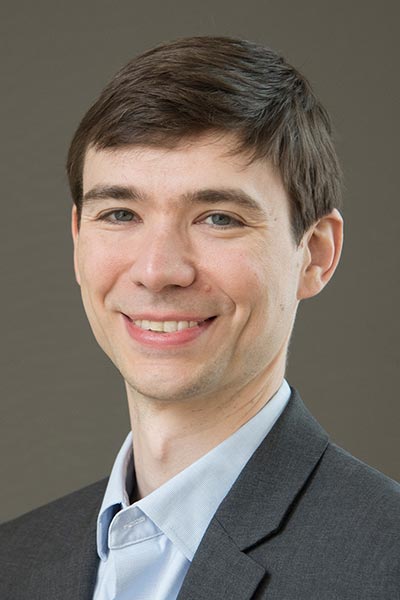
Steven Corsello, MD
AACR NextGen Stars Class of 2026
Assistant Professor
Stanford University, Stanford, California
Abstract Presentation:
Discovery of TRIM21 molecular glues that drive potent antitumor efficacy via nuclear pore complex degradation
Session Details:
SY05: Glues and Heterobifunctionals as Novel Therapeutics
Monday, April 20, 12:30-2 p.m. PT
Ballroom 6 CF – Upper Level – Convention Center
What is the subject of your research?
My lab uses phenotypic, cell-based screening approaches to identify cancer vulnerabilities. We find that drugs often interact with unexpected targets in cells and trigger unusual mechanisms. For example, molecular glues act by stimulating the binding of proteins that do not normally interact. At the Annual Meeting, I will present our work on a molecular glue mechanism identified by phenotypic screening with therapeutic potential in pancreatic cancer.
What sparked your interest in this area of research, and why is it important?
Pancreatic cancer is a deadly disease, claiming more than 50,000 lives annually in the United States alone. As a physician-scientist and oncologist, I see firsthand how additional therapeutic targets are needed to improve patient outcomes. During my training, I recognized how phenotypic screens offer a way to capture gain- or change-of-function pharmacology that may not be evident from tumor genetics alone, a key motivator for our work.
Where would you like to see your area of research be in five years?
I hope to see phenotypic approaches yield more effective and selective cancer therapeutics.
What (or who) inspired you to apply for the NextGen Stars program?
I learned about the program at past AACR Annual Meetings.
What do you hope to take away from your experience as a NextGen Star and your time at the AACR Annual Meeting?
I am looking forward to sharing our work and learning about new efforts across the fields of cancer target and drug discovery. I am also excited to see colleagues from around the globe and make new connections.