To help further the professional advancement of early-career researchers, the American Association for Cancer Research (AACR) launched the NextGen Stars Program in 2014. Each year, graduate students, postdocs, and assistant professors are selected to present their work during highly visible sessions at the AACR Annual Meeting.
This year’s class of NextGen Stars includes 11 individuals spanning different areas of cancer research. Learn more about the work of Long Chi Nguyen, PhD, MD, below, and check out Q&As with the other NextGen Stars to discover their research focus.
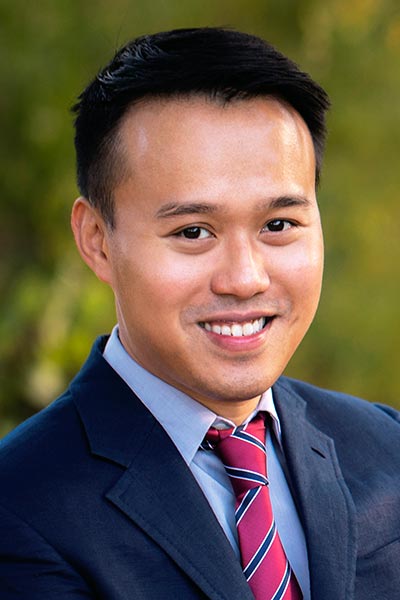
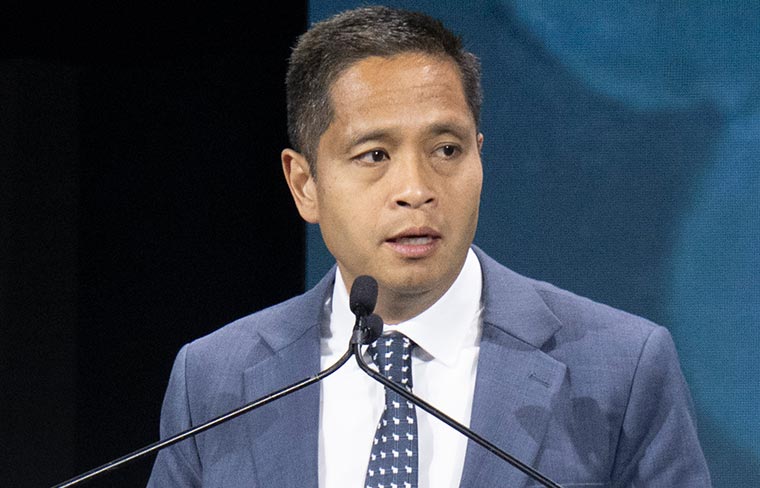
Long Chi Nguyen, PhD, MD
AACR NextGen Stars Class of 2026
Postdoctoral Researcher
University of Chicago, Chicago, Illinois
Abstract Presentation:
BACH1 drives hypoxia-induced stem-like transition states and immune evasion in breast cancer
Session Details:
SY14: Mechanisms of Immune Evasion and Immune Dysregulation
Sunday, April 19, 1-2:30 p.m. PT
Ballroom 6 CF – Upper Level – Convention Center
What is the subject of your research?
My research focuses on triple-negative breast cancer, one of the most aggressive and therapeutically challenging forms of the disease. I study how tumor microenvironment-induced stress, such as hypoxia and immune pressure, activates transcriptional programs that allow tumor cells to adapt to hostile conditions—driving metastasis and immune escape. By mapping these stress-driven cell states at high resolution, my work aims to identify molecular vulnerabilities that contribute to disease progression and therapeutic resistance.
What sparked your interest in this area of research, and why is it important?
I come from Vietnam, a developing country where many cancer patients present to the clinic with advanced and metastatic disease and then have limited treatment options. During my medical training, learning how cancer progression and metastasis contribute to treatment failure left a strong impression on me. These experiences motivated me to pursue research focused on why metastatic cancers are so difficult to treat and how tumor cells adapt to survive therapeutic stress. Identifying these vulnerabilities is critical to improving outcomes for patients with advanced disease.
Where would you like to see your area of research be in five years?
In five years, I hope this work will lead to clear clinical impact for patients with advanced cancer, particularly triple-negative breast cancer, by directly addressing the biology of metastasis. As emerging technologies enable higher-resolution datasets, artificial intelligence-driven approaches should help define and predict metastatic tumor states, improve patient stratification, and guide more effective treatments for metastatic disease. Achieving this progress will require close collaboration between clinicians and basic scientists, and I am eager to contribute at this interface.
What (or who) inspired you to apply for the NextGen Stars program?
I was inspired by the strong sense of community the program fosters among early-career scientists working at the forefront of cancer research. I have followed several previous NextGen Stars cohorts and found their work and leadership motivating. The opportunity to grow alongside peers who share a commitment to meaningful scientific and clinical impact was especially compelling to me.
What do you hope to take away from your experience as a NextGen Star and your time at the AACR Annual Meeting?
I look forward to sharpening my scientific perspective, learning about the latest advances in cancer research, and exchanging ideas with scientists across diverse disciplines at the AACR Annual Meeting 2026. I also hope to build new connections and collaborations as I take the next step toward leading an independent research program.