To help further the professional advancement of early-career researchers, the American Association for Cancer Research (AACR) launched the NextGen Stars Program in 2014. Each year, graduate students, postdocs, and assistant professors are selected to present their work during highly visible sessions at the AACR Annual Meeting.
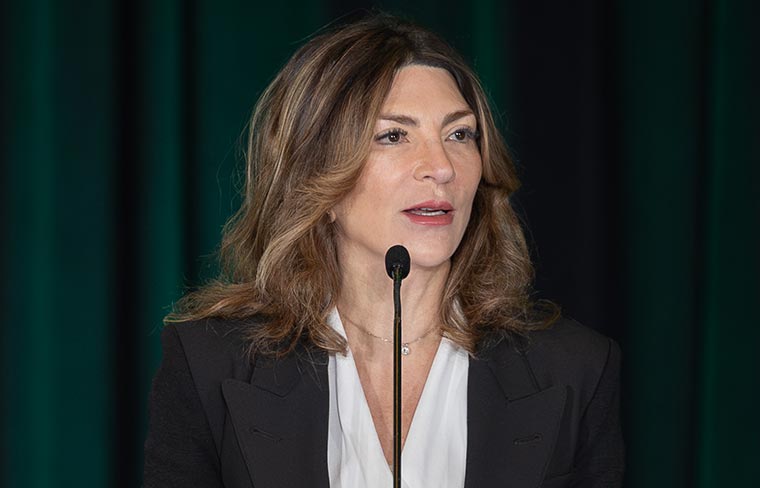
This year’s class of NextGen Stars includes 11 individuals spanning different areas of cancer research. Learn more about the work of Amulya Sreekumar, PhD, below, and check out Q&As with the other NextGen Stars to discover their research focus.
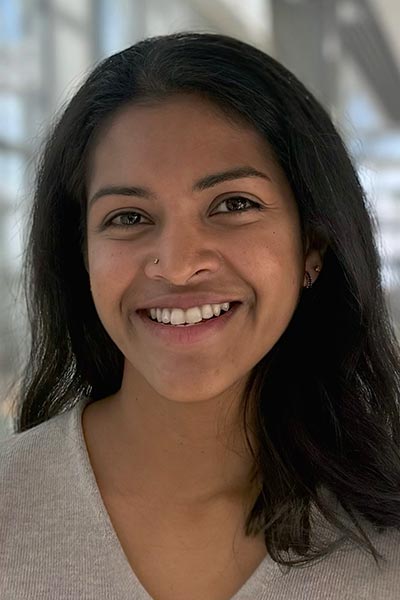
Amulya Sreekumar, PhD
AACR NextGen Stars Class of 2026
Research Associate
University of Pennsylvania, Philadelphia, Pennsylvania
Abstract Presentation:
Residual breast cancer cells co-opt SOX5-driven endochondral ossification to maintain dormancy
Session Details:
AOS02: Advances in Understanding Disseminated Tumor Cells: An Emerging Opportunity to Prevent Lethal Breast Cancer?
Sunday, April 19, 1-2:30 p.m. PT
Room 31 – Upper Level – Convention Center
What is the subject of your research?
Breast cancer mortality is driven largely by incurable recurrences seeded by residual tumor cells that survive first-line therapy. My previous work identified glycan biosynthesis as a selective vulnerability in these therapy-resistant cells. My current research asks what adaptive advantages are conferred upon residual tumor cells by elevated glycan biosynthesis, and whether this regulatory axis can be targeted to delay or even prevent recurrence.
What sparked your interest in this area of research, and why is it important?
My foray into glycobiology was the result of a functional genomics screen that unexpectedly identified glycan biosynthesis as a major regulator of therapy-resistant residual tumor cell persistence. Despite their central roles in health and disease, glycans remain an understudied class of biomolecules. With rapid advances in biochemical tools, complex disease modeling, and functional genomics, we are now well equipped to interrogate how glycans shape cancer progression. This exciting, largely untapped field holds great promise for discoveries that could meaningfully improve long-term outcomes for breast cancer patients.
Where would you like to see your area of research in five years?
I envision the deployment of advanced tools to systematically map glycan functions across tumor cells and the surrounding microenvironment, and to define how these interactions collectively drive tumor progression. Such insights will be essential for identifying new therapeutic strategies to intercept disease before it becomes incurable.
What (or who) inspired you to apply for the NextGen Stars program?
The invaluable opportunity to present my research to a broad and diverse community of cancer biologists right at the outset of my independent research career was a powerful motivator to apply to the NextGen Stars program.
What do you hope to take away from your experience as a NextGen Star and your time at the AACR Annual Meeting?
I am excited for the many opportunities to discuss science, discover emerging research directions, and build collaborations with scientists from around the world.