To help further the professional advancement of early-career researchers, the American Association for Cancer Research (AACR) launched the NextGen Stars Program in 2014. Each year, graduate students, postdocs, and assistant professors are selected to present their work during highly visible sessions at the AACR Annual Meeting.
This year’s class of NextGen Stars includes 11 individuals spanning different areas of cancer research. Learn more about the work of Alvaro Curiel Garcia, PhD, below, and check out Q&As with the other NextGen Stars to discover their research focus.
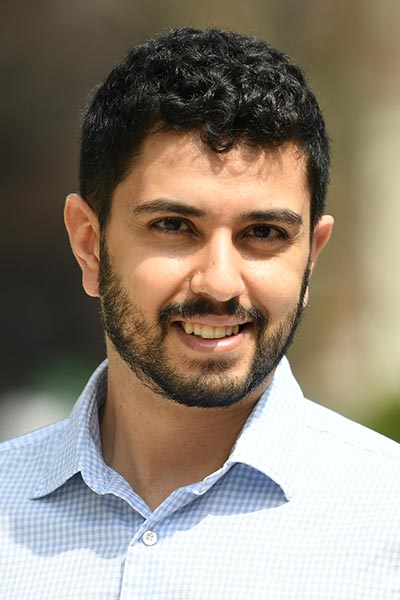
Alvaro Curiel Garcia, PhD
AACR NextGen Stars Class of 2026
Associate Research Scientist
Columbia University Irving Medical Center, New York, New York
Abstract Presentation:
BMAL2 is a KRAS-driven master regulator of hypoxic adaptation and EMT in pancreatic ductal adenocarcinoma
Session Details:
SY27: RAS Inhibitors, Mechanisms of Resistance, and Drug Combinations
Monday, April 20, 12:30-2 p.m. PT
Ballroom 20 AB – Upper Level – Convention Center
What is the subject of your research?
My research focuses on understanding how cancer cells adapt to hostile microenvironments through transcriptional regulatory programs, with a particular emphasis on pancreatic cancer. I study how hypoxia and metabolic stress reshape tumor cell states via coordinated regulatory networks, and how these adaptive programs create nongenetic dependencies. By integrating systems biology with functional experimentation, my work aims to identify key regulatory vulnerabilities that can be therapeutically targeted.
What sparked your interest in this area of research, and why is it important?
My interest was driven by a central paradox in pancreatic cancer: Despite profound hypoxia, nutrient limitation, and therapeutic pressure, tumor cells remain highly resilient. This resilience suggested that adaptive capacity itself, rather than isolated oncogenic events, may be a fundamental driver of disease progression. Understanding how transcriptional programs orchestrate metabolic and cell-state adaptation is critical because most current therapies target static genetic alterations, while adaptive resistance emerges from dynamic, nongenetic regulatory responses that enable tumor survival and treatment failure, limiting the durability of clinical benefit.
Where would you like to see your area of research be in five years?
In five years, I hope the field will move beyond descriptive tumor-state signatures toward actionable regulatory frameworks that directly inform therapy. I aim for my work to help establish adaptive transcriptional programs as tractable therapeutic targets, integrating regulatory network models into translational pipelines that guide patient stratification, and combination strategies.
What (or who) inspired you to apply for the NextGen Stars program?
I have been familiar with the NextGen Stars program for several years and have learned about it directly from previous awardees, whose experiences highlighted its value at a critical stage of scientific independence. Their feedback, together with the encouragement and support of my mentors, was instrumental in motivating me to pursue this opportunity. The AACR Annual Meeting brings together a broad and diverse scientific audience, offering an ideal setting to share my work and engage with investigators across disciplines.
What do you hope to take away from your experience as a NextGen Star and your time at the AACR Annual Meeting?
I hope to receive thoughtful feedback on my scientific vision from investigators working across cancer metabolism, systems oncology, and translational therapeutics. I look forward to engaging with fellow NextGen Stars and the broader cancer research community to exchange ideas, discuss emerging directions in the field, and explore opportunities for meaningful collaboration. I also see this experience as a way to broaden my perspective on how basic research, systems oncology, and clinical medicine intersect in shaping the future of cancer research and therapy.