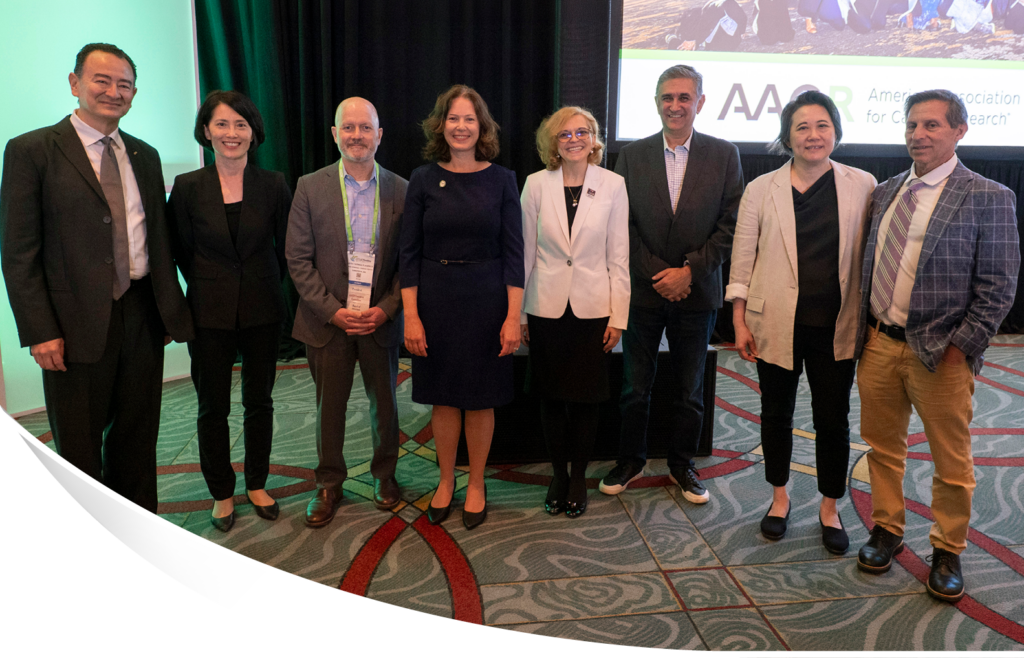
To help further the professional advancement of early-career researchers, the American Association for Cancer Research (AACR) launched the NextGen Stars Program in 2014. Each year, graduate students, postdocs, and assistant professors are selected to present their work during highly visible sessions at the AACR Annual Meeting.
This year’s class of NextGen Stars includes 11 individuals spanning different areas of cancer research. Learn more about the work of Adam Grippin, MD, PhD, below, and check out Q&As with the other NextGen Stars to discover their research focus.
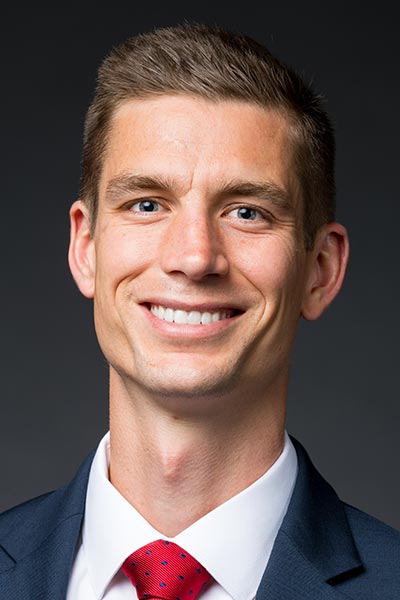
Adam Grippin, MD, PhD
AACR NextGen Stars Class of 2026
Resident/Postdoctoral Candidate
The University of Texas MD Anderson Cancer Center, Houston, Texas
Abstract Presentation:
Mechanisms by which mRNA vaccines augment responses to immune checkpoint blockade
Session Details:
SY11: Cancer Vaccines: The Next Immunotherapy Breakthrough?
Monday, April 20, 12:30-2 p.m. PT
Ballroom 6 A – Upper Level – Convention Center
What is the subject of your research?
I focus on development and translation of novel RNA-based therapeutics to reprogram patients’ immune systems to kill cancer.
What sparked your interest in this area of research, and why is it important?
My interest in RNA therapeutics and cancer immunotherapy was sparked by my time at the University of Florida Brain Tumor Immunotherapy Program, where I worked with Duane Mitchell, MD, PhD, and Elias Sayour, MD, PhD, to develop personalized RNA vaccines for patients with cancer. I loved the vision of this group, and woke up every morning excited to help develop new technology to improve outcomes for patients with brain tumors.
Where would you like to see your area of research be in five years?
While working on our personalized vaccine, we discovered that RNA therapeutics were effective even when they were not personalized. This discovery is important because it opens the door to the development of universal RNA therapeutics that might improve outcomes across many cancer types. The most important next question is whether RNA vaccines targeting infectious disease antigens will prime antitumor immunity in patients. We are currently designing phase III clinical trials to answer this question. At the same time, we seek to develop more powerful universal RNA therapeutics that take advantage of their ability to prime immunity without any requirement for tumor tissue. My hope is that these efforts will help establish universal, off-the-shelf RNA therapeutics as cancer therapeutics.
What (or who) inspired you to apply for the NextGen Stars program?
The AACR Annual Meeting is a premier opportunity to present our work and make connections across disciplines and institutions around the world. I am incredibly grateful for the NextGen Stars program because it offers the opportunity for me to share the stage with some of the luminaries in our field.
What do you hope to take away from your experience as a NextGen Star and your time at the AACR Annual Meeting?
Although attendees at the AACR Annual Meeting come from many different institutions, we are all focused on ending cancer. I hope the unparalleled opportunity to share my science as a NextGen Star will help me make connections that I can carry throughout my career, and allow me to play a small part in that larger mission.