To help further the professional advancement of early-career researchers, the American Association for Cancer Research (AACR) launched the NextGen Stars Program in 2014. Each year, graduate students, postdocs, and assistant professors are selected to present their work during highly visible sessions at the AACR Annual Meeting.
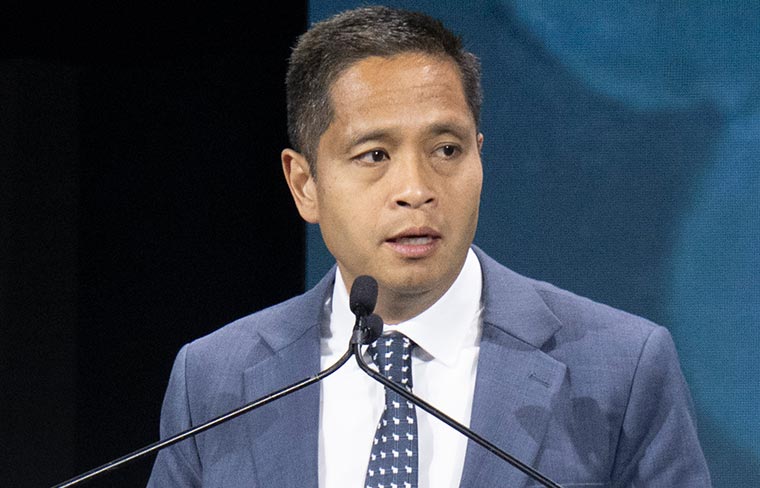
This year’s class of NextGen Stars includes 11 individuals spanning different areas of cancer research. Learn more about the work of Ray Pillai, MD, below, and check out Q&As with the other NextGen Stars to discover their research focus.
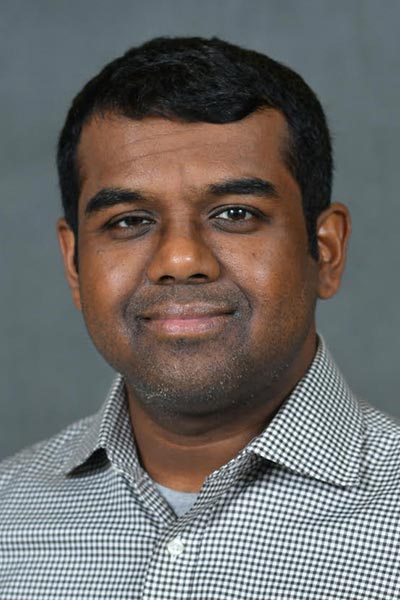
Ray Pillai, MD
AACR NextGen Stars Class of 2026
Instructor
NYU Grossman School of Medicine, New York, New York
Abstract Presentation:
Autocrine LIF signaling: A novel therapeutic target to eliminate inflammatory and immunosuppressive cancer stem cells in LKB1 mutant lung adenocarcinoma
Session Details:
SY26: Signaling Pathways in Cancer: Dedicated to the Memory of J. Michael Bishop
Monday, April 20, 12:30-2 p.m. PT
Room 30 – Upper Level – Convention Center
What is the subject of your research?
My research centers on identifying new ways to treat lung cancer. In particular, I focus on lung tumors that have mutations in KEAP1 or LKB1 (also known as STK11) because these mutations lead to resistance to therapies and are associated with poor outcomes. To study this, I develop lung cancer mouse models where I generate tumors with these mutations and examine how cancer cells interact with the immune cells in the surrounding microenvironment. At the AACR Annual Meeting, I will present my work on how LKB1 mutant lung tumors secrete the cytokine LIF, which induces tumors to adopt a stem-like state that in turn remodels the immune microenvironment with immunosuppressive myeloid cells. I subsequently show that blocking LIF with an antibody reverses this immunosuppression. This work overall suggests that targeting LIF is a novel immunomodulatory therapeutic approach for lung tumors with LKB1 mutations.
What sparked your interest in this area of research, and why is it important?
I am a physician-scientist and so I try to narrow my research to tackle challenges commonly faced in the clinic. Multiple clinical trials have identified that LKB1 mutant lung cancer is poorly responsive to anti-PD-1/anti-PDL-1 therapy, and many research groups are looking at the mechanism in which LKB1 mutations induces resistance to immunotherapy. My hope is that my mechanistic work in mouse models can be readily translated to the clinic.
Where would you like to see your area of research be in five years?
Scientific tools are rapidly evolving, and with this, we have a greater understanding of the tumor microenvironment. Spatial transcriptomic platforms are becoming increasingly used to evaluate interactions between cancer cells and immune cells. In the future, novel therapeutics that disrupt the interactions in which tumors suppress antitumor immune responses will be critical to achieve improved and sustained response rates. 3D spatial platforms are also on the horizon, which will add resolution to study these interactions.
What (or who) inspired you to apply for the NextGen Stars program?
For me, the AACR Annual Meeting is one of the leading cancer conferences covering the spectrum of basic, translation, and clinical research in the field and is well attended by academia and industry leaders. I applied to the NextGen Stars program to demonstrate the amazing research our group has been doing on a large stage. While my work focuses specifically on lung cancer, by reaching a broad audience, I hope that others hearing about my work may find similar targetable vulnerabilities in other cancer contexts and apply that to develop new therapies.
What do you hope to take away from your experience as a NextGen Star and your time at the AACR Annual Meeting?
This is a great opportunity to network with leaders in the field as well as junior researchers performing cutting-edge science. In the next year, I am hoping to establish my own independent laboratory, so I am keeping an eye out for potential collaborations on future research projects.