
2026
-
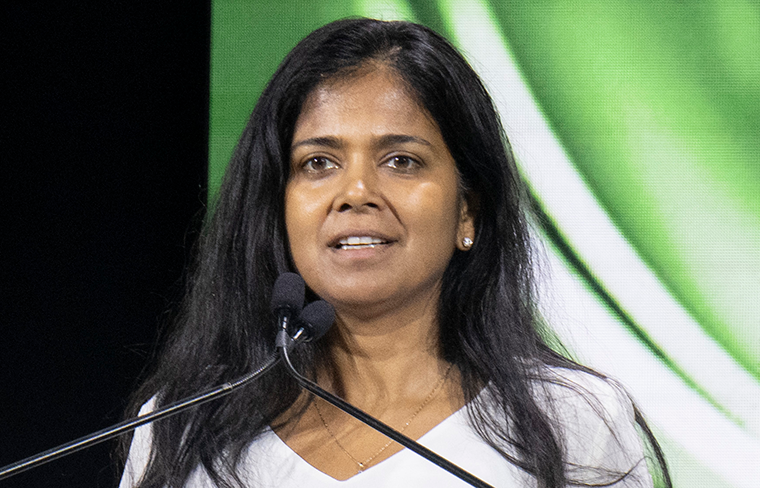
Third Plenary Session examined the AI revolution across cancer labs and clinics
Suchi Saria, PhD, reviewed her work adapting AI to use in real-world health care settings—a proposition that, she said, necessarily requires a rigorous approach to build trust, considering the high-stakes environment of direct patient treatment.
-
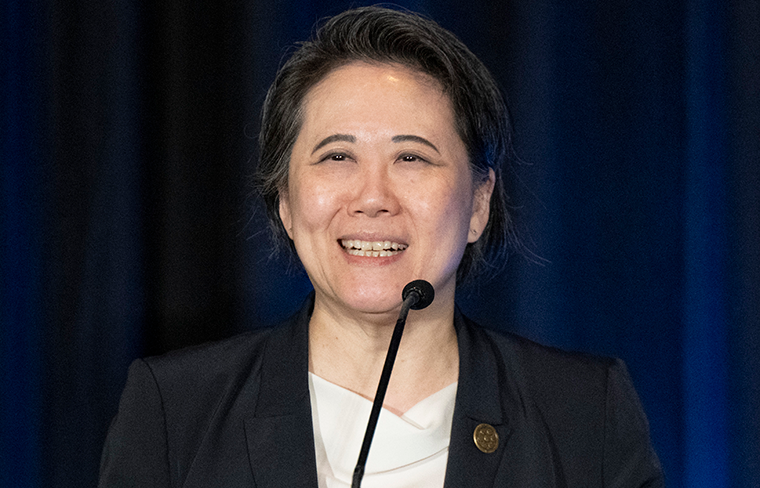
Presidential Address explored insights gleaned from head and neck cancer research
During her Presidential Address, Lillian L. Siu, MD, FAACR, laid out how new discoveries about the molecular landscape of head and neck cancer could potentially be applied across cancer types.
-
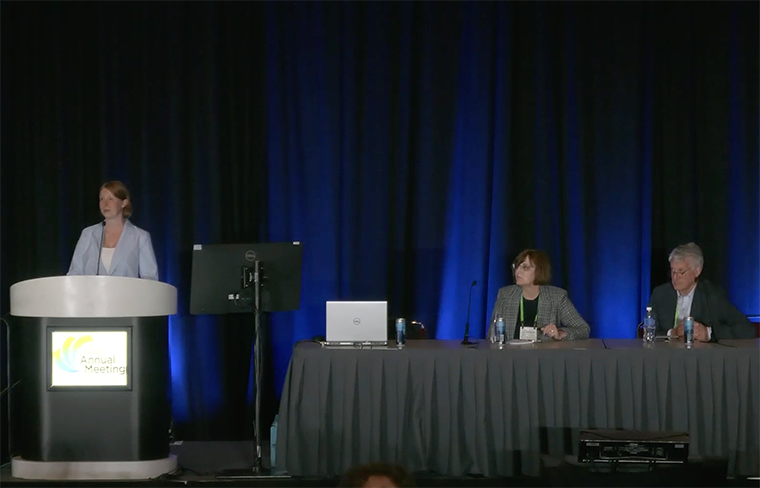
Four novel molecules disclosed at the first New Drugs on the Horizon session
Presenters shared details from the forefront of translational innovation in oncology, highlighting for the first time the chemical structures and mechanisms of action of four novel therapeutic molecules—NEO-811, AZD8359, TNG961, and EPI-326.
-
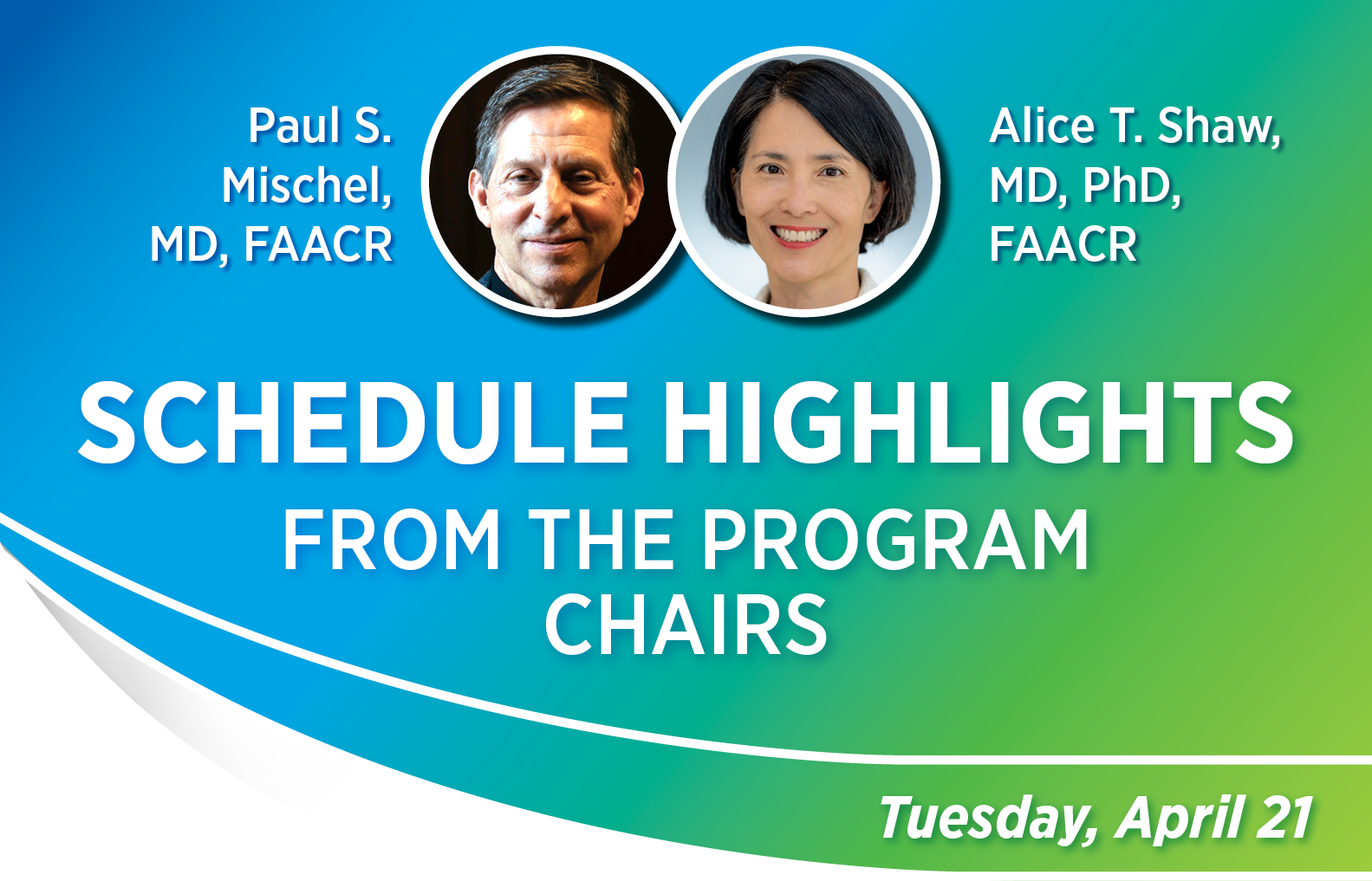
Schedule Highlights from the Program Chairs: Tuesday, April 21
Don’t miss a Plenary Session on early-onset cancers, sessions on precision oncology and immunotherapy strategies, and more, say Program Committee Chairs Paul S. Mischel, MD, FAACR, and Alice T. Shaw, MD, PhD, FAACR.
-
Wednesday morning Plenary Session will examine innovative cancer treatment modalities
The first of two Plenary Sessions on Wednesday will convene leading experts who are advancing radioligand therapy, antibody-drug conjugates (ADCs), T‑cell engagers, and tumor‑infiltrating lymphocyte (TIL) therapy.
-
Closing Plenary Session will showcase key takeaways from the AACR Annual Meeting 2026
A final Plenary Session on Wednesday afternoon will offer a unique opportunity for attendees to learn about some of the biggest advances reported at the meeting across the continuum of cancer research.
-
Second set of Meet-the-Expert Sessions will span broad range of topics from renowned presenters
On Tuesday evening, four field-defining researchers will cover multiomics approaches to cancer classification, tumor and immune-cell dynamics, strategies for overcoming drug resistance in clinical trials, and telomere targeting.
-
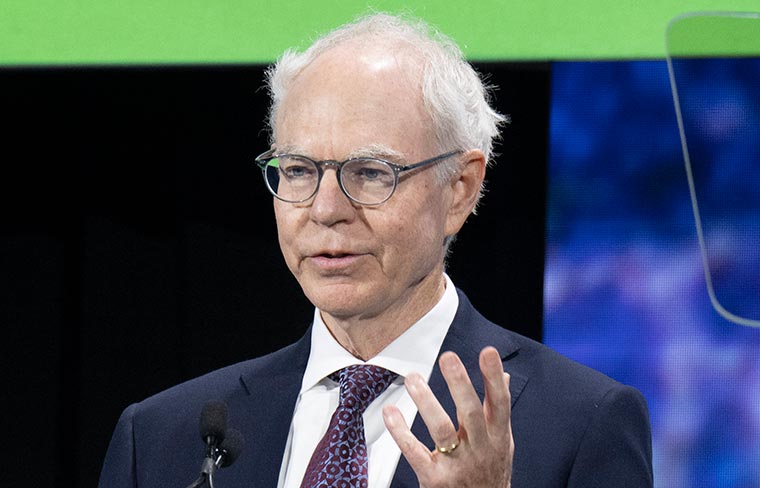
Opening Plenary offered insights into therapeutic resistance and innovative approaches to cancer care
Charles L. Sawyers, MD, FAACR, explained that the progression from castration-sensitive to castration-resistant prostate cancer occurs, in part, through a lineage switch that converts prostate cancer cells from an adenocarcinoma cell state to a neuroendocrine state.
-
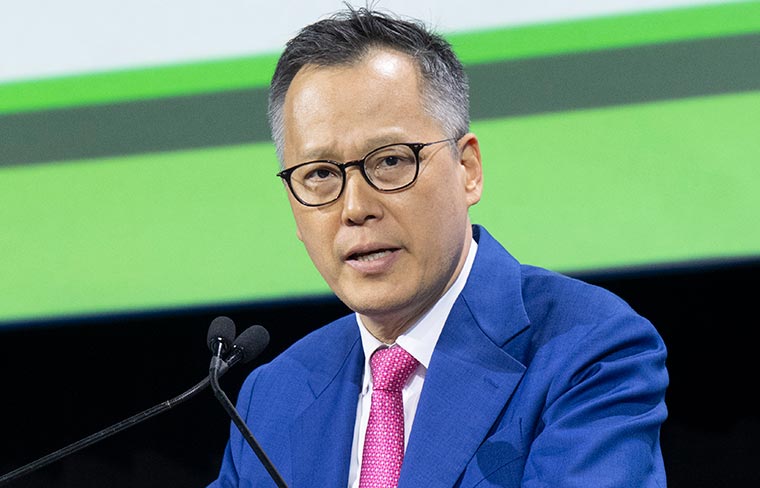
First Clinical Trials Plenary featured latest precision oncology therapies
Byoung Chul Cho, MD, presented updated results from a phase I/II clinical trial of the next-generation KRAS-G12C inhibitor elisrasib, which was designed for faster and stronger target engagement, to afford sustained inhibition, Cho explained.
-
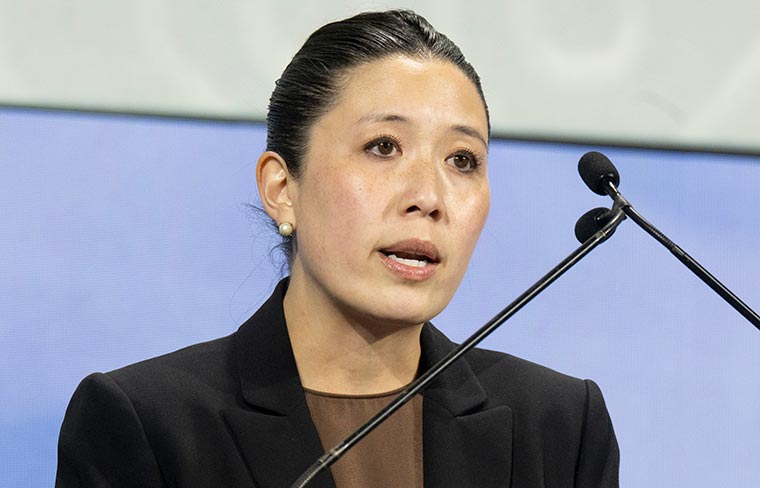
Second Clinical Trials Plenary highlighted results of next-generation antibody-drug conjugates
Elizabeth K. Lee, MD, presented results from a phase I dose-escalation clinical trial testing a combination of the PARP inhibitor olaparib and the ADC DS-8201a, also known as trastuzumab deruxtecan.